Introduction
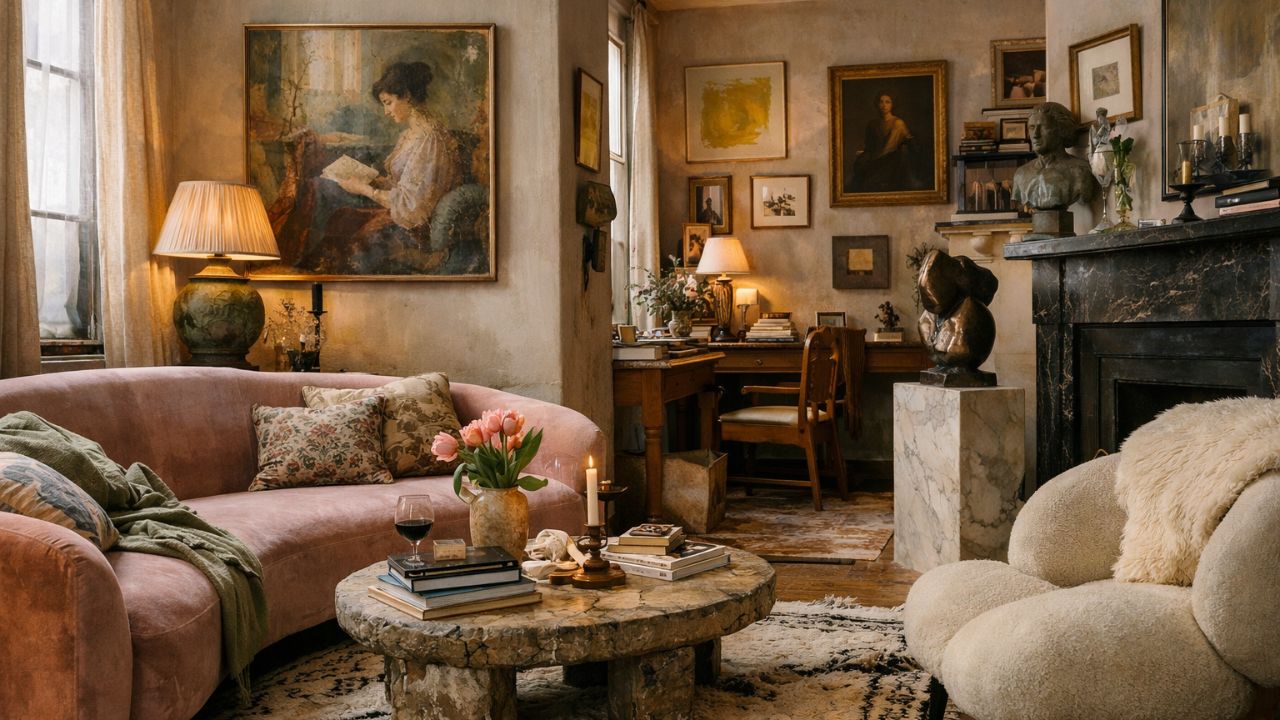
Material is often felt before it is seen. In the dark academia aesthetic, the atmosphere is not created through objects alone, but through the quiet interaction of surfaces—wood that carries warmth, linen that softens the space, and stone that brings stillness beneath light.
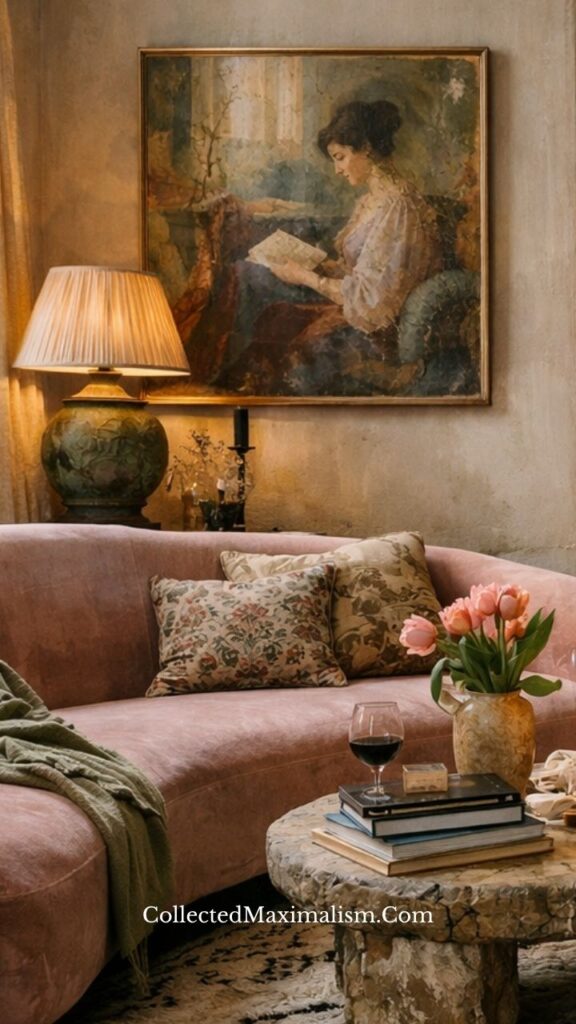
Layering becomes the foundation of the room. It allows textures to merge rather than compete, creating a space that feels both grounded and romantic. Instead of sharp contrast, the aesthetic relies on subtle shifts—matte against soft sheen, structured surfaces beside gentle fabrics—forming a quiet richness that feels natural over time.
1. Material as the Foundation of Mood
In the dark academia aesthetic, materials define how a space feels before anything else is introduced. Wood, stone, and aged metals create a sense of permanence, giving the room depth and weight.
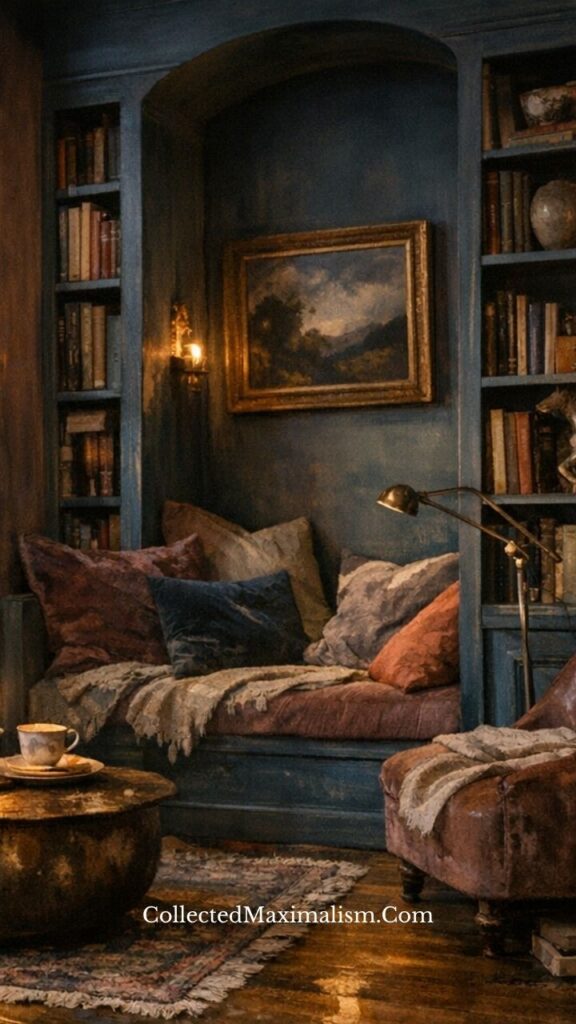
Softer elements—linen, velvet, and paper textures—are layered onto this base, creating balance rather than contrast. The room feels composed not because of decoration, but because of what it is made from.
Pro tip: Begin with one dominant material, such as dark wood, to anchor the entire space.
2. Layering Wood, Stone, and Fabric
True material layering moves across categories. Wood introduces warmth, stone provides calm stability, and fabric softens the transition between them.
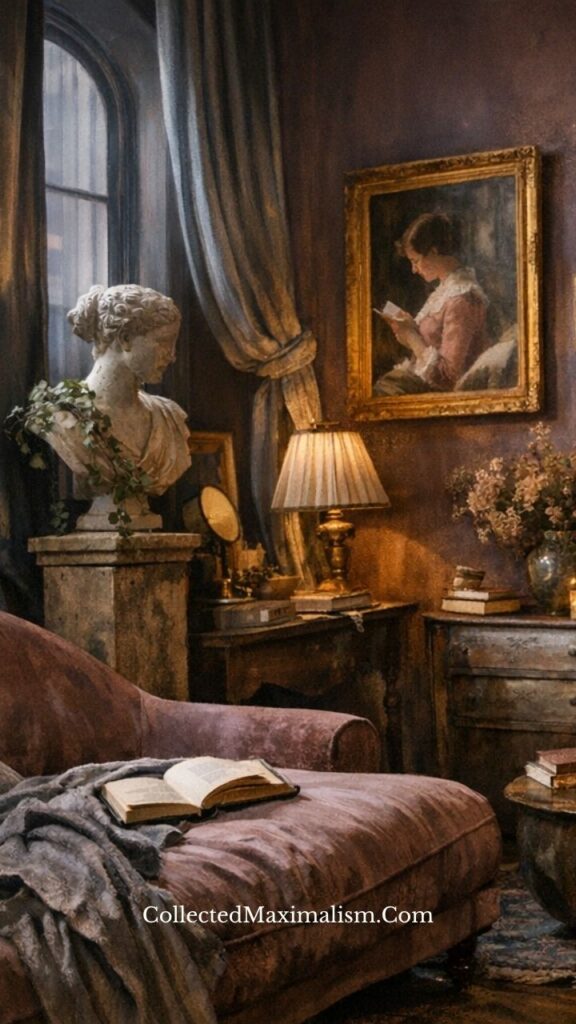
The goal is not contrast, but connection. When tones shift gently between materials, the room begins to feel cohesive, as though each surface belongs naturally within the space.
Pro tip: Keep tones within a similar muted range to maintain harmony.
3. The Role of Aged Finishes
The dark academia aesthetic favors materials that feel lived-in rather than new. Patina on brass, worn wood edges, and softened ceramic finishes introduce depth that polished surfaces cannot replicate.
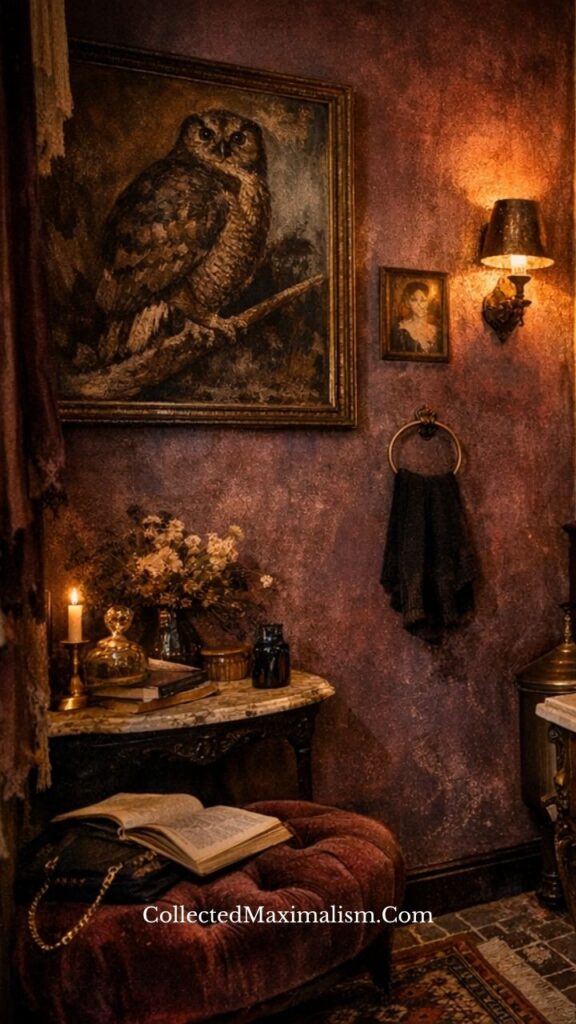
These imperfections reflect light differently, adding subtle variation and allowing the room to feel collected over time rather than newly styled.
Pro tip: Choose finishes that feel slightly aged instead of overly refined.
4. Balancing Softness with Structure
Material layering works best when there is a balance between structure and softness. Hard surfaces like tables and cabinets ground the space, while textiles such as curtains, throws, and upholstery introduce ease.
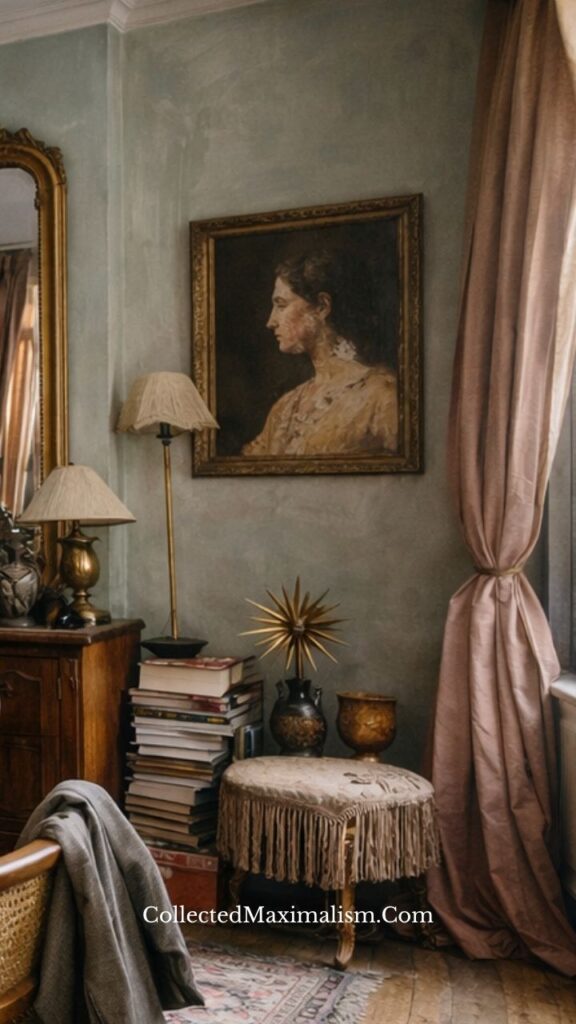
Together, they create a room that feels both stable and relaxed, never too heavy or too minimal.
Pro tip: Pair each structured surface with a soft element nearby to create balance.
5. Using Light to Reveal Texture
Light transforms how materials are experienced. In the dark academia aesthetic, warm lighting enhances texture, allowing shadows to define depth instead of removing it.
A linen shade diffuses light softly, while ceramic or brass surfaces reflect it subtly. These interactions bring materials to life without adding visual noise.
Pro tip: Position light so it grazes surfaces rather than directly illuminating them.
6. Repetition and Rhythm in Materials
Layering is not about endless variation—it is about thoughtful repetition. When materials appear more than once across a room, they create rhythm and cohesion.
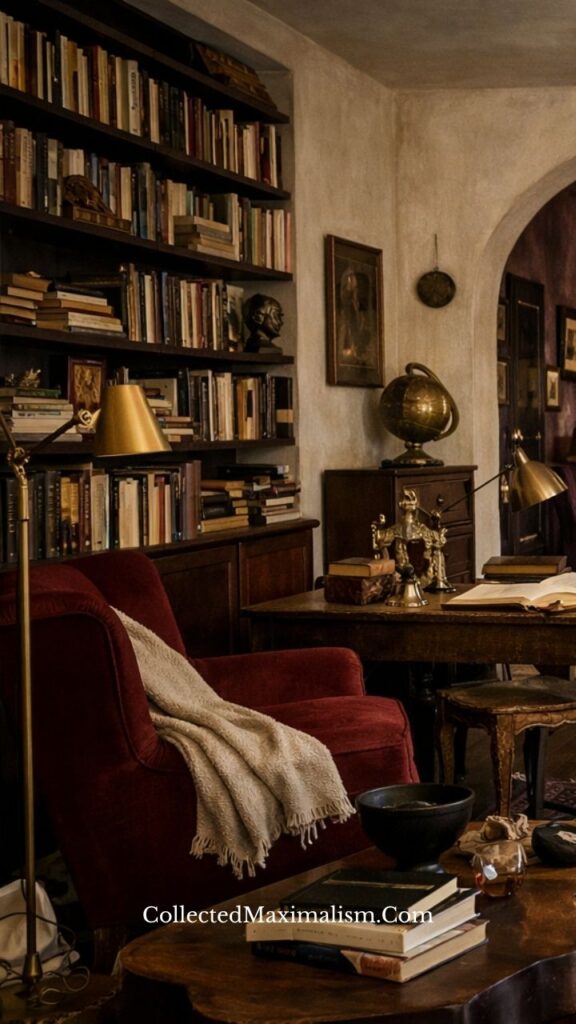
A brass detail echoed in a lamp and tray, or wood tones repeated across furniture, allows the space to feel connected without appearing overly designed.
Pro tip: Repeat one material at least three times across the room.
7. Creating a Collected, Timeless Space
When materials are layered with intention, the room begins to feel naturally assembled. Each surface contributes quietly, and nothing feels out of place.
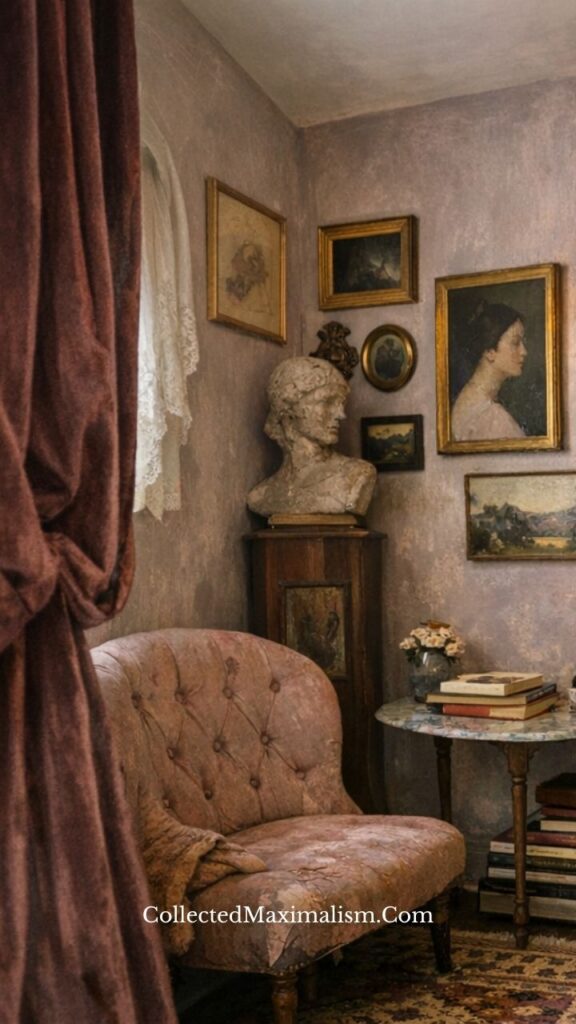
This is where the dark academia aesthetic becomes most compelling—when the space feels less like a design and more like something that has evolved over time.
Pro tip: Remove anything that disrupts the material flow—it should feel continuous and calm.
More on Maximalism
8 Dining Table Decor Ideas | Romantic Dark Academia Maximalism
Light Fixtures in Maximalism: A Softer Approach to Layered Light
How to Style a Maximalist Home Using Memories, Art, and Travel Objects
Collected Maximalism: The Art of Composed Intensity
12 Types of Maximalism in Interior Design — And How to Use Them Intentionally
Collected vs Curated in Maximalist Interiors: Is There a Difference?
The Psychology of Maximalism: Emotional Density in Layered Interiors
Minimal Maximalism: Abundance Within Restraint
The Maximalist Way to Shop: How to Collect with Intention
Maximalist Interior Design: Layering Texture, Form, and Warm Earth Tones
Shopping / Sourcing for Dark Academia Aesthetic Material Layering
When building a dark academia aesthetic, sourcing is less about buying everything at once and more about collecting pieces that feel timeless and layered. Focus on materials that add depth, texture, and warmth rather than perfectly matching items.
Look for wood furniture with matte or slightly aged finishes to create a grounded base. Add stone elements like marble or textured surfaces to introduce contrast without sharpness. Incorporate soft textiles such as linen, velvet, and layered fabrics to balance structure with comfort.
Warmth comes through brass or aged metal accents, especially in lighting or small details. Complete the space with ceramic pieces, books, and vintage-inspired objects that feel personal and slightly imperfect.
The goal is not to fill the room, but to build it slowly—choosing materials that connect with each other and create a cohesive, lived-in atmosphere.
10 Common Mistakes in Dark Academia Aesthetic Material Layering (And How to Fix Them)
1. Using Only One Material in Interior Styling
Relying on a single material makes the space feel flat and lifeless.
How to fix: Mix wood, fabric, and stone to create depth and variation.
2. Creating Too Much Contrast Between Materials
Sharp contrast disrupts the calm, layered feel of the dark academia aesthetic.
How to fix: Choose materials within a similar muted tone range for smoother transitions.
3. Choosing Overly Polished or Modern Finishes
High-gloss and sleek surfaces break the aged, romantic mood.
How to fix: Use matte, textured, or slightly worn finishes to add character.
4. Ignoring Texture in Material Layering
Without texture variation, the room lacks richness and dimension.
How to fix: Combine soft textiles with structured surfaces like wood or stone.
5. Overloading the Space with Too Many Materials
Too many materials create visual chaos instead of layering.
How to fix: Limit to 3–4 core materials and repeat them across the space.
6. Skipping Soft Elements in the Room
Hard surfaces alone can make the space feel cold and heavy.
How to fix: Add linen, velvet, or soft fabrics to balance structure with comfort.
7. Not Repeating Materials Across the Space
When materials appear only once, the room feels disconnected.
How to fix: Repeat key materials like wood or brass in multiple areas for cohesion.
8. Using Incorrect Lighting for Materials
Harsh lighting flattens textures and removes depth.
How to fix: Use warm lighting to highlight surfaces and create soft shadows.
9. Layering Materials Without Intent
Random placement makes the space feel cluttered rather than collected.
How to fix: Place materials thoughtfully so each one connects visually with another.
10. Treating Materials as Decoration Instead of Foundation
When materials are an afterthought, the design feels superficial.
How to fix: Start with materials first, then build decor around them.
Conclusion
Material layering is not about adding more, but about allowing surfaces to interact in a meaningful way. In the dark academia aesthetic, this creates a space that feels warm, grounded, and quietly complex.
When materials are chosen and layered thoughtfully, the room holds a sense of continuity—soft, romantic, and deeply lived-in.
10 FAQs on Dark Academia Aesthetic Material Layering
1. What is material layering in the dark academia aesthetic
Material layering in the dark academia aesthetic refers to combining textures like wood, fabric, stone, and metal to create depth, warmth, and a collected interior feel
2. Why is material layering important in dark academia interiors
It adds dimension and prevents spaces from feeling flat, helping create the rich, moody atmosphere that defines the dark academia aesthetic
3. What materials work best for dark academia interiors
Wood, linen, velvet, marble, and aged metals like brass are commonly used to create a balanced and textured environment
4. How do you layer materials without making a space look cluttered
Focus on cohesion by repeating a few key materials and keeping tones within a similar muted palette
5. Can modern materials work in the dark academia aesthetic
Yes, if they are toned down with matte finishes or paired with softer, aged textures to blend into the overall mood
6. How many materials should be used in one room
Ideally, limit to three or four main materials and repeat them throughout the space for a cohesive look
7. How does lighting affect material layering
Warm lighting enhances textures and creates soft shadows, helping materials feel richer and more dimensional
8. What textures are essential for creating depth
A mix of soft and structured textures such as linen, velvet, wood, and stone creates the layered effect
9. How do you make materials feel cohesive in a room
Use repetition, similar tones, and balanced placement so each material visually connects with others
10. Can material layering work in small spaces
Yes, by using fewer materials but maintaining variation in texture, even small spaces can feel rich and layered