Introduction
A dining table, when thoughtfully layered, becomes more than a place to gather—it becomes a quiet expression of mood, memory, and intention. In spaces shaped by romantic dark academia and vintage maximalist styling, every object feels chosen slowly, as if collected over time rather than arranged all at once.

There is a softness here, even within depth. Candlelight flickers against aged brass, florals lean gently into shadow, and worn books rest beside stone and wood. These dining table decor ideas rooted in romantic dark academia vintage maximalism are not about perfection, but about creating a space that feels lived-in, intimate, and deeply personal.
1. Layering the Table as a Still Life
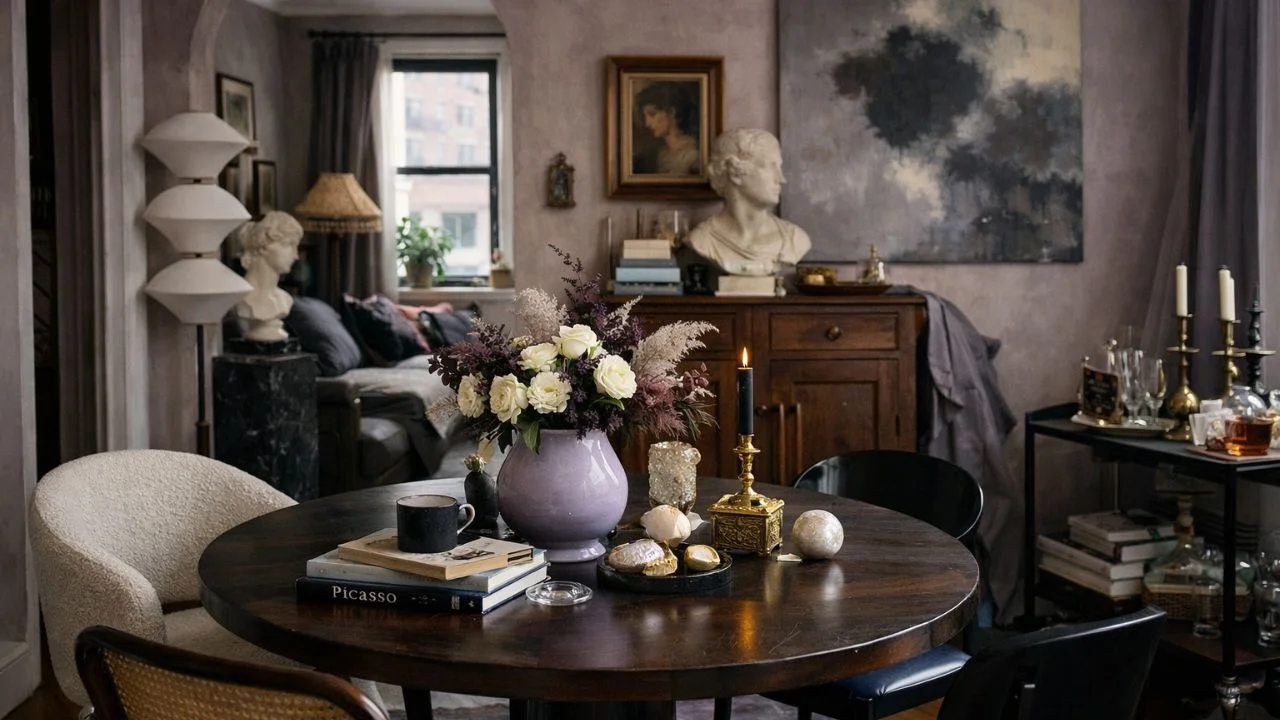
A collected dining table begins with composition, not decoration. Think of it as a still life painting—each object placed not for function alone, but for how it relates to the others in form, tone, and quiet presence. This approach sits at the heart of many dining table decor ideas inspired by vintage maximalist and dark academia spaces, where layering feels intuitive rather than styled.

What makes the arrangement feel intentional is restraint within abundance. Even when multiple objects exist, they move in a shared rhythm—rounded forms echoing one another, materials repeating gently. The table doesn’t feel crowded; it feels composed.
2. The Warmth of Candlelight and Brass
Lighting is not an afterthought here—it is the emotional center. Brass candlesticks introduce both height and warmth, their aged surfaces reflecting light in a muted, golden way that feels timeless rather than decorative.
The softness of candlelight changes everything it touches. It blurs edges, deepens shadows, and creates that quiet, romantic atmosphere often associated with dark academia dining spaces. Here, maximalism becomes gentle—less about visual noise, more about feeling.
3. Mixing Marble, Wood, and Time-Worn Surfaces
The tension between materials is what creates depth. A marble table feels cool, almost architectural, while aged wood introduces warmth and history. When these are paired, the contrast becomes the story.

This balance is what defines vintage maximalist styling—not matching, but layering opposites until they feel naturally connected. The heaviness of stone is softened by textiles or florals, while rustic wood is elevated by refined objects like glassware or ceramics.
4. Florals as Soft Structure
Flowers in these spaces are not decorative extras—they are structural elements. They soften the composition, bridging hard materials and adding movement where objects are still.

The arrangements lean toward muted palettes: creams, dusty pinks, deep burgundy, dried stems. There’s a quiet romance in how they sit—never too perfect, always slightly undone—echoing the mood of a romantic, collected dining table.
5. The Role of Books and Personal Objects
Books anchor the table in personality. They introduce height, but more importantly, they introduce narrative. A table with books feels inhabited—it suggests pauses, conversations, quiet moments.

Layered beside them, smaller objects—glasses, bowls, collected pieces—bring intimacy. This is where dining table decor ideas shift from styling to storytelling, where maximalism becomes deeply personal rather than purely visual.
6. Gallery Walls as a Backdrop to Dining
The table never exists alone. Behind it, walls filled with art—portraits, landscapes, sketches—extend the story upward. These gallery walls are not symmetrical or perfect; they feel gathered over time.

This backdrop gives the table context. It connects the objects below to a larger visual language, where everything—frames, tones, subjects—feels quietly related.
7. Creating Intimacy Through Density
What makes these dining spaces feel special is not just what is added, but how closely it is held together. Objects are not spaced apart for minimal clarity—they are allowed to exist near one another.

This density creates intimacy. It invites the eye to linger, to move slowly from one object to the next. The room feels full, but never overwhelming—because everything belongs.
More on Maximalism
Light Fixtures in Maximalism: A Softer Approach to Layered Light
How to Style a Maximalist Home Using Memories, Art, and Travel Objects
Collected Maximalism: The Art of Composed Intensity
12 Types of Maximalism in Interior Design — And How to Use Them Intentionally
Collected vs Curated in Maximalist Interiors: Is There a Difference?
The Psychology of Maximalism: Emotional Density in Layered Interiors
Minimal Maximalism: Abundance Within Restraint
The Maximalist Way to Shop: How to Collect with Intention
Maximalist Interior Design: Layering Texture, Form, and Warm Earth Tones
8. Subtle Color Layering in Neutral Palettes
The palette appears neutral at first glance, but it is layered with intention. Warm browns, muted greens, dusty mauves, soft creams—they sit beside each other in quiet harmony.
Instead of contrast, the focus is on depth. Colors shift slightly from one object to the next, creating a gradient rather than a statement. This is what gives the space its calm richness.
Shopping / Sourcing
- Brass candlesticks (varying heights)
- Marble or stone bowls
- Vintage wooden dining tables
- Worn books with neutral or aged covers
- Ceramic vases (matte, imperfect finishes)
- Oil paintings or portrait prints
- Linen table cloths or runners
- Glassware with subtle tint or thickness
- Small decorative trays (wood or brass)
- Dried florals and muted fresh arrangements
10 Common Mistakes in Romantic Dark Academia Table Styling
1. Over-styling with perfect symmetry
When everything is evenly placed, the table can feel staged rather than lived-in. A collected surface benefits from slight irregularity, where objects settle naturally instead of aligning too precisely.
2. Relying only on new pieces
Without elements that carry texture or age, the table can feel flat. A sense of time—through worn books, patina, or imperfect finishes—adds quiet depth and character.
3. Overlooking the role of lighting
Lighting shapes the entire atmosphere. Harsh or overly bright light can flatten textures, while softer light allows materials and layers to feel more nuanced and present.
4. Introducing too much contrast
Sharp contrasts can interrupt the calm flow of the table. Gentle transitions in tone create a more cohesive and layered composition, allowing the eye to move softly across the surface.
5. Keeping everything at the same height
When objects sit at a single level, the arrangement loses movement. Subtle variation in height creates rhythm, giving the table a more dynamic and balanced presence.
6. Layering without intention
A dense table can feel either curated or overwhelming. The difference lies in placement—each object should relate to the next, creating a sense of connection rather than accumulation.
7. Forgetting softness
Without textiles, florals, or gentle materials, the table can feel rigid. Soft elements introduce balance, easing the weight of harder surfaces like wood, stone, or metal.
8. Matching elements too closely
Too much uniformity can remove depth. A collected table feels richer when materials and finishes vary slightly, creating quiet contrast within a cohesive palette.
9. Using overly vivid florals
Bright or overly fresh arrangements can disrupt the muted atmosphere. Softer tones and slightly undone florals tend to blend more naturally into the overall composition.
10. Treating the table as separate from the room
A table should feel connected to its surroundings. When it reflects the colors, textures, and mood of the space, it becomes part of a larger story rather than a standalone element.
Conclusion
A dining table styled in this way is never about a final arrangement—it is about a quiet unfolding. Objects shift, light changes, seasons pass, and the table evolves with them. What remains constant is the feeling: a sense of depth, warmth, and something gently lived-in.
In romantic dark academia and vintage maximalist spaces, the table becomes more than a surface. It holds presence. The weight of books, the softness of florals, the glow of candlelight—all existing together in a way that feels both intentional and unforced.
And perhaps that is where its beauty truly lies.
Not in how perfectly it is styled, but in how naturally it gathers—layer by layer—until it begins to feel like it has always belonged.
10 FAQs for Romantic Dark Academia Dining Table Styling
1. What defines a maximalist dining table?
A maximalist dining table is shaped through layering rather than excess. It brings together objects, textures, and materials that feel gathered over time, creating a surface that feels lived-in rather than deliberately styled.
2. How do I avoid clutter?
Clutter is avoided through cohesion. When materials, tones, or shapes gently repeat, the table feels connected, allowing multiple elements to exist without overwhelming the space.
3. Can I mix wood and marble?
Yes, and the contrast often adds quiet depth. The coolness of marble paired with the warmth of wood creates balance, especially when softened with textiles or florals.
4. What kind of lighting works best?
Soft, warm lighting works best—particularly candlelight. It brings a sense of intimacy, softening edges and allowing the layers on the table to feel more atmospheric.
5. Do I need antique pieces?
Not necessarily, but pieces with a sense of age or texture help create authenticity. Even newer items can work when they feel understated rather than overly polished.
6. How many objects should I use?
There is no fixed number. The aim is to create layering while still allowing space between objects, so the table feels composed rather than crowded.
7. Are florals necessary?
Florals are not essential, but they introduce softness and movement. They help balance heavier materials and bring a natural ease to the arrangement.
8. What colors work best?
Muted, warm tones tend to work best. Subtle variations within a soft palette create depth without drawing attention to any single element.
9. Should everything match?
Matching is less important than harmony. A table feels more collected when elements differ slightly but still relate through tone, material, or mood.
10. Can this work in small spaces?
Yes, it adapts well to smaller spaces. By scaling down the number and size of objects while maintaining variation and layering, the same feeling can be achieved without overcrowding.


