Introduction
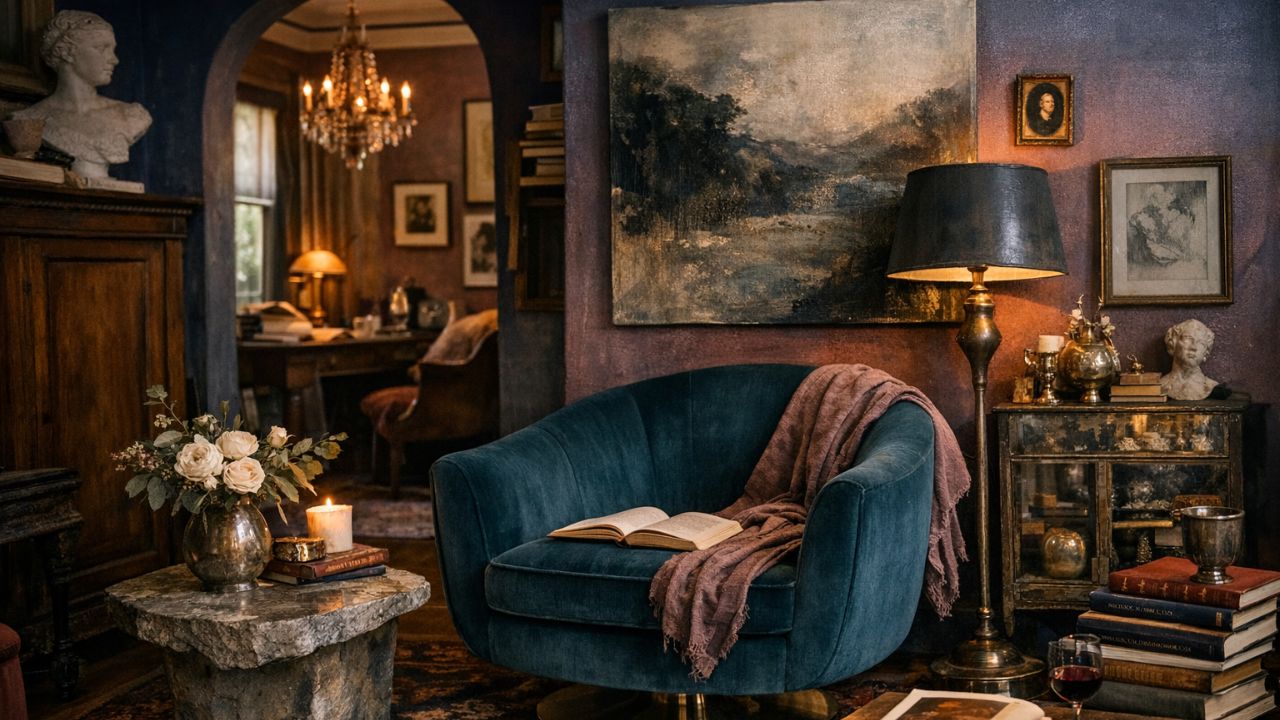
Light fixtures, in a romantic dark academia interior, are never simply functional. They are atmospheric, almost narrative in the way they shape a space. A lamp does not just illuminate—it softens edges. A sconce does not just brighten—it reveals texture. Even the faint glow of a candle becomes part of the room’s quiet rhythm.
In these interiors, light fixtures are layered slowly and intentionally. They do not flood the room with brightness but instead create pockets of warmth—small moments of glow that gather across wood, fabric, and stone. These romantic dark academia light fixture ideas are less about visibility and more about feeling. They create depth, intimacy, and a sense of stillness that makes the space feel lived-in and enduring.
1. Ambient Light Fixtures as the Foundation
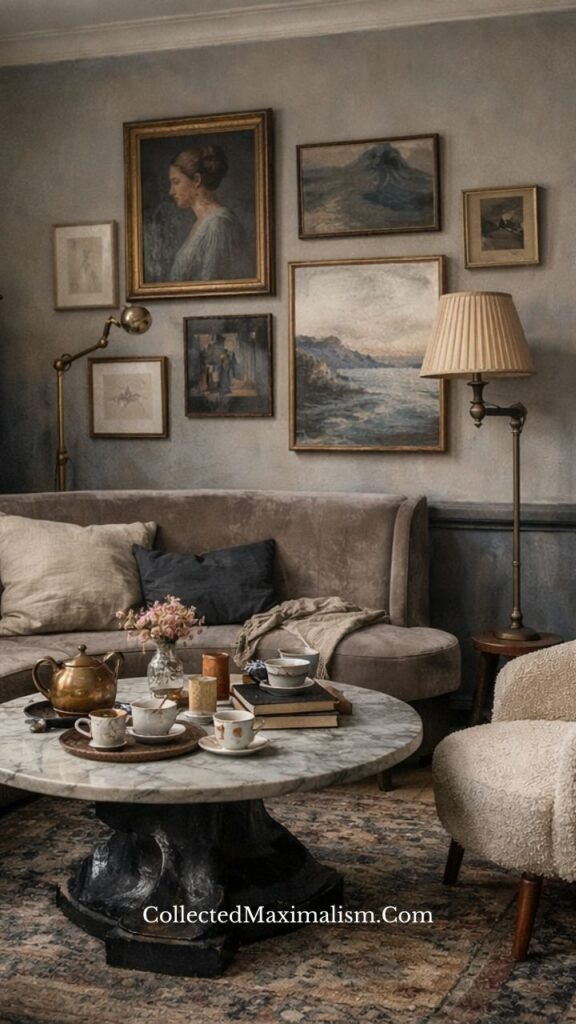
Every space begins with a base layer of light, and in dark academia interiors, this foundation is always soft. Ambient light fixtures—whether subtle ceiling lights or diffused overhead pieces—set the tone without overwhelming the room.

The goal is not brightness, but balance. A gentle, even glow allows the rest of the lighting layers to emerge naturally. Instead of flattening the space, these fixtures create a quiet backdrop, where shadows are allowed to remain and depth is preserved.
This foundation is what makes the rest of the light fixtures feel intentional rather than decorative.
2. Table Lamps as Intimate Light Fixtures
Table lamps are perhaps the most personal form of light fixtures in a room. They sit close to everyday objects—books, ceramics, textiles—and create a soft, localized glow that draws the eye inward.
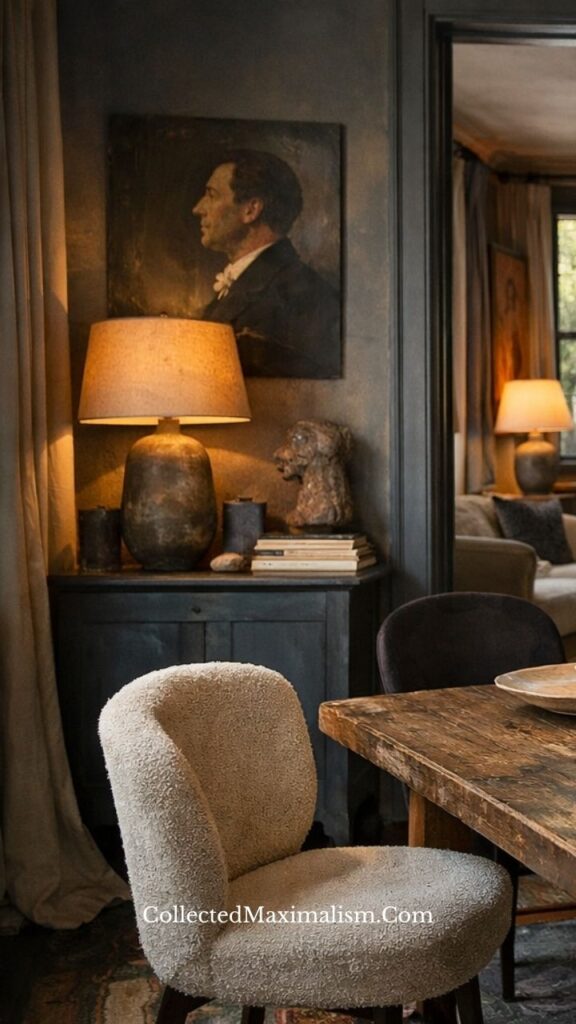
In romantic dark academia spaces, these light fixtures often feature:
- fabric or pleated shades
- aged brass or ceramic bases
- slightly worn textures
The light they cast is warm and contained. It doesn’t reach far, and that’s precisely the point. It creates intimacy—small areas where the room feels closer, quieter, more reflective.
These lamps are not just lighting elements; they become part of the composition itself.
3. Wall Sconces as Architectural Light Fixtures
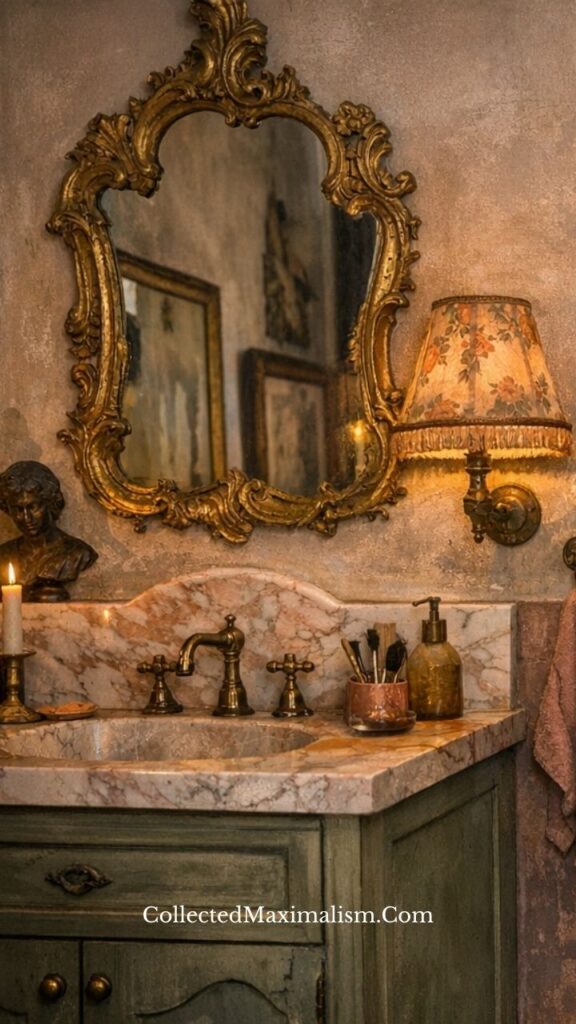
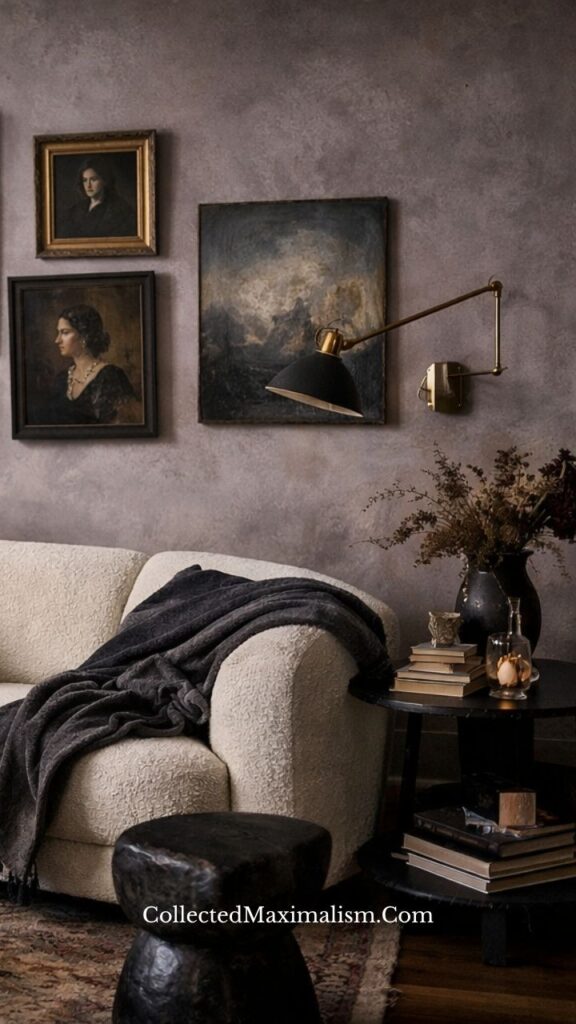
Wall sconces introduce a different quality of light. Unlike table lamps, they sit higher, allowing light to move across walls and highlight textures that might otherwise go unnoticed.
These light fixtures feel almost architectural. They:
- frame artwork
- soften corners
- create vertical layering
Their glow is often directional, casting gentle shadows that add depth rather than removing it. In dark academia interiors, sconces often feature antique finishes or fabric shades, reinforcing the sense of age and quiet elegance.
They are subtle, but they transform the way a room is experienced.
4. Statement Light Fixtures That Anchor the Room
Certain light fixtures do more than illuminate—they define the space. Chandeliers and pendant lights fall into this category, acting as visual anchors that bring structure and presence.
In romantic dark academia interiors, these fixtures often feel:
- aged rather than polished
- sculptural rather than minimal
- softly glowing rather than bright
A chandelier, for example, may not be the primary source of light. Instead, it introduces a layered glow that interacts with other light sources below. Pendant lights, similarly, create focused warmth while adding visual weight to the room.
These fixtures ground the space, giving it a sense of permanence and quiet drama.
5. Candlelight as Living Light Fixtures
Candlelight occupies a unique place among light fixtures. It is the only source that moves, flickers, and shifts over time. This movement brings life into the space, softening everything it touches.
Unlike other light fixtures, candles are not designed to illuminate fully. They exist to deepen the atmosphere. Their glow is uneven, subtle, and constantly changing—creating shadows that feel alive.
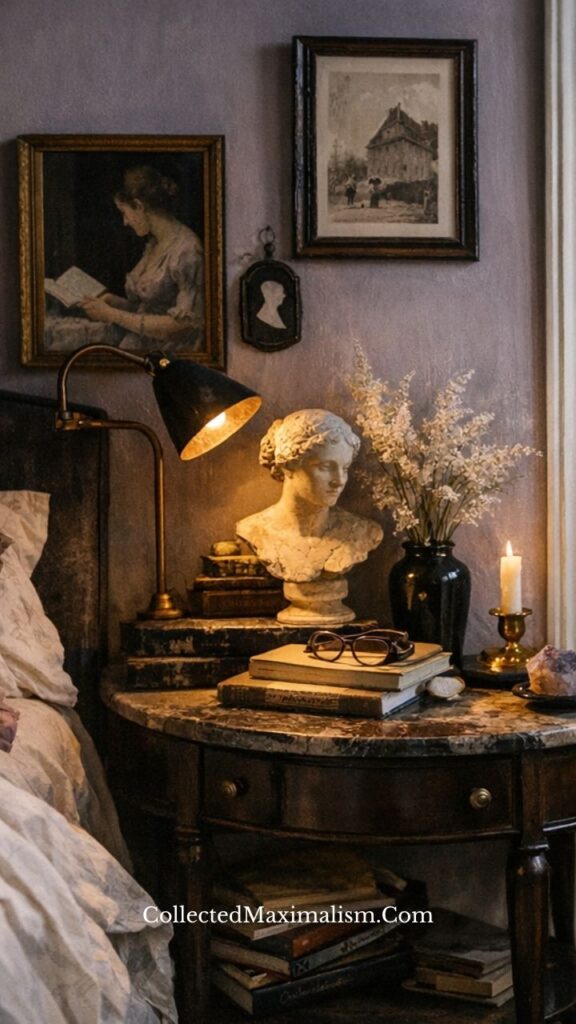
In dark academia interiors, candlelight is often layered:
- on tables
- beside books
- near mirrors or artwork
It is this layering that creates intimacy. The room feels quieter, more personal, and more reflective.
6. Layering Light Fixtures for Depth
No single light fixture defines a romantic dark academia interior. Instead, the atmosphere is built through layering—multiple light sources working together, each adding a different quality.
A typical layering might include:
- ambient ceiling light
- table lamps
- wall sconces
- candlelight
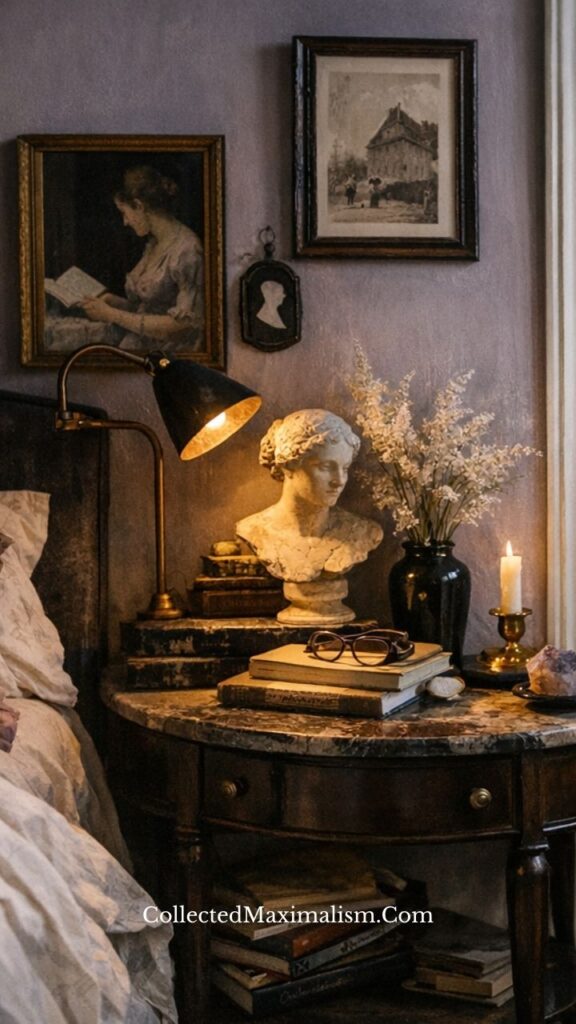
Each fixture contributes something unique. Some soften, some highlight, some create shadows. Together, they form a balanced composition where light feels natural rather than forced.
This layering is what transforms a space from simply lit to deeply atmospheric.
7. Materials That Shape the Glow of Light Fixtures
Light is never separate from the materials around it. The surfaces it touches—brass, fabric, stone—change how it is perceived.
In romantic dark academia interiors:
- brass reflects warmth
- fabric diffuses light
- marble softens brightness
- wood absorbs and grounds it
Choosing the right materials for light fixtures is essential. A polished surface may feel too sharp, while a textured or aged finish allows the light to settle more gently into the space.
The result is a glow that feels natural, almost as if it belongs to the room itself.
More on Maximalism
8 Dining Table Decor Ideas | Romantic Dark Academia Maximalism
Light Fixtures in Maximalism: A Softer Approach to Layered Light
How to Style a Maximalist Home Using Memories, Art, and Travel Objects
Collected Maximalism: The Art of Composed Intensity
12 Types of Maximalism in Interior Design — And How to Use Them Intentionally
Collected vs Curated in Maximalist Interiors: Is There a Difference?
The Psychology of Maximalism: Emotional Density in Layered Interiors
Minimal Maximalism: Abundance Within Restraint
The Maximalist Way to Shop: How to Collect with Intention
Maximalist Interior Design: Layering Texture, Form, and Warm Earth Tones
8. Integrating Light Fixtures into the Overall Composition
Light fixtures should never feel isolated. A lamp is not just placed—it is positioned beside books, near artwork, or alongside objects that echo its tone and material.
This integration creates cohesion. The light fixture becomes part of a larger arrangement rather than a standalone element.
When done well:
- a lamp complements nearby textures
- a sconce frames a painting
- a candle connects objects on a surface
The lighting becomes inseparable from the decor, contributing to a space that feels layered, intentional, and complete.
10 Common Mistakes to Avoid When Using Lighting in Romantic Dark Academia Interiors
1. Relying on a single light source
Using only one central source can flatten the entire room. Dark academia interiors rely on multiple layers—lamps, sconces, and candlelight—to create depth and atmosphere.
2. Choosing overly bright or cool-toned bulbs
Cool white lighting disrupts the warmth of the space. A soft, warm glow works far better, allowing shadows to remain and the room to feel more atmospheric.
3. Ignoring layered lighting
When all illumination comes from one place, the room loses dimension. Combining different sources allows certain areas to glow while others remain quiet, creating balance.
4. Using pieces that feel too modern or polished
Sleek, high-gloss finishes can feel disconnected from the aged, collected aesthetic. Materials with patina—brass, ceramic, or textured surfaces—create a more cohesive look.
5. Over-lighting the space
Too much brightness removes the mood entirely. Romantic dark academia interiors thrive in softness, where light is present but never overwhelming.
6. Skipping candlelight completely
While not a traditional source, candlelight plays a crucial role. Without it, the space can feel static. Candles introduce movement and warmth that other forms cannot replicate.
7. Placing lighting without considering composition
A lamp placed without context can feel disconnected. It should sit alongside books, art, or objects so it feels integrated into the overall arrangement.
8. Keeping all light sources at the same height
When everything sits at one level, the room can feel flat. Mixing heights—table lamps, wall sconces, and overhead pieces—creates a more dynamic and layered effect.
9. Using identical pieces throughout
Matching everything too closely removes depth. Subtle variation, while maintaining a cohesive tone, helps the space feel collected rather than uniform.
10. Treating lighting as purely functional
When chosen only for practicality, the space loses its atmosphere. In this style, lighting shapes mood—it is felt as much as it is seen.
Conclusion
Light fixtures in romantic dark academia interiors are not chosen for brightness, but for atmosphere. They shape how a room is experienced—how it feels at dusk, how shadows settle, how warmth gathers in quiet corners.
Over time, these light fixtures become part of the room’s rhythm. A lamp is moved slightly, a candle burns lower, a new layer is added. Nothing remains fixed, yet everything feels grounded.
And perhaps that is their true purpose—not to illuminate completely, but to create a space where light and shadow exist together, in quiet balance.
10 FAQs for Romantic Dark Academia Light Fixtures
1. What defines light fixtures in a dark academia interior?
Light fixtures in dark academia interiors are defined by warmth, softness, and a sense of age. Rather than bright or minimal, they feel layered and atmospheric, often using materials like brass, fabric, or ceramic to create a gentle, diffused glow.
2. How many light fixtures should a room have?
There is no fixed number, but a single light source is rarely enough. Multiple light fixtures—such as lamps, sconces, and overhead lighting—work together to create depth and a more balanced atmosphere.
3. What type of light fixtures work best for this style?
Table lamps, wall sconces, chandeliers, and candlelight all work beautifully. The key is choosing light fixtures that feel slightly aged or textured, rather than overly sleek or modern.
4. Are overhead light fixtures necessary?
Overhead light fixtures can be useful, but they should remain soft and subtle. They act as a base layer, while other light fixtures like lamps and candles create the mood.
5. What color temperature is best for light fixtures?
Warm light works best. It enhances the richness of materials and allows shadows to remain, which is essential for creating a calm and layered interior.
6. Can modern light fixtures work in dark academia spaces?
Yes, but they should be chosen carefully. Modern light fixtures with muted finishes or simple forms can blend well if they don’t feel too polished or stark.
7. Where should light fixtures be placed for the best effect?
Light fixtures should be placed where they create small moments of warmth—beside seating, near books, along consoles, or framing artwork. Placement is as important as the fixture itself.
8. How do you layer different light fixtures effectively?
Layering works by combining different types of light fixtures at varying heights. A mix of ambient, task, and accent lighting creates a space that feels dimensional rather than evenly lit.
9. Is candlelight necessary when using light fixtures?
While not essential, candlelight adds a unique quality that other light fixtures cannot replicate. It introduces movement and softness, making the space feel more intimate.
10. How do I keep light fixtures from feeling too heavy or dark?
Balance is key. Pair heavier or darker light fixtures with softer elements like textiles or lighter surfaces, allowing the space to feel grounded but not overwhelming.