Introduction
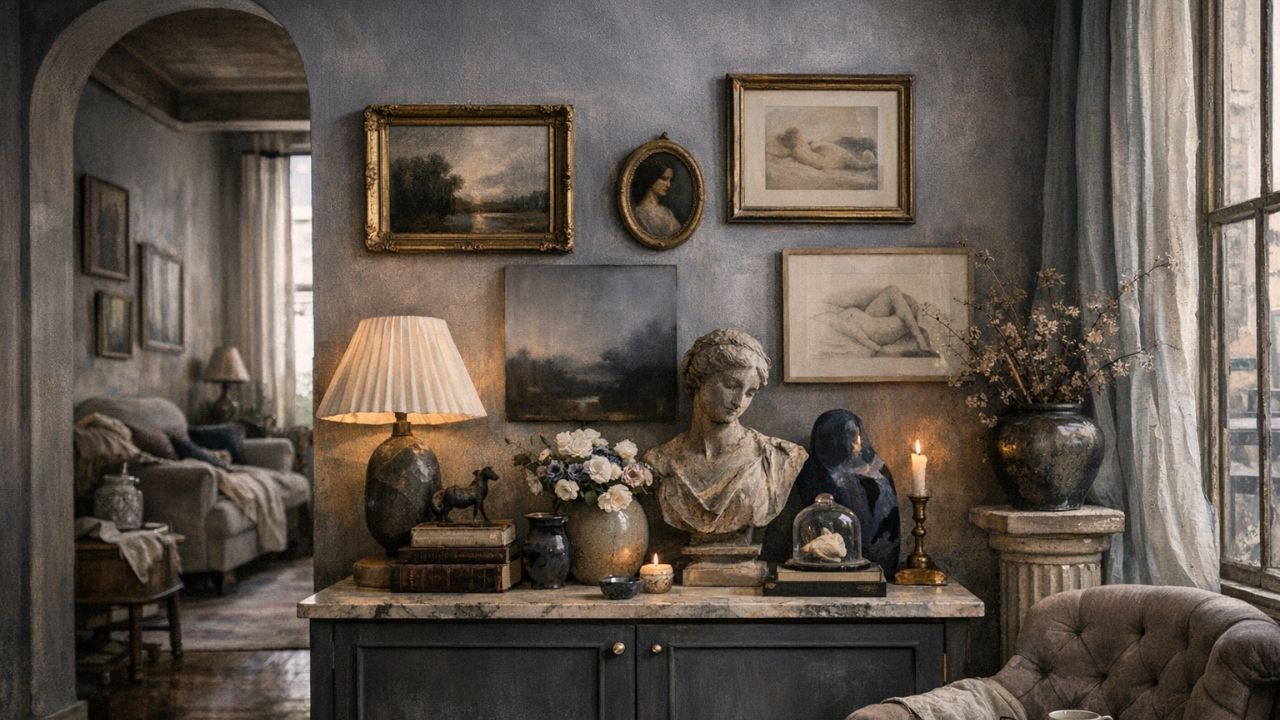
A console table is often the first quiet moment a room offers. Placed against a wall, it does not demand attention—but it holds it, gently. In romantic dark academia interiors shaped by vintage maximalism, this surface becomes more than decorative. It becomes a place where objects gather, where light settles, where the room begins to speak.
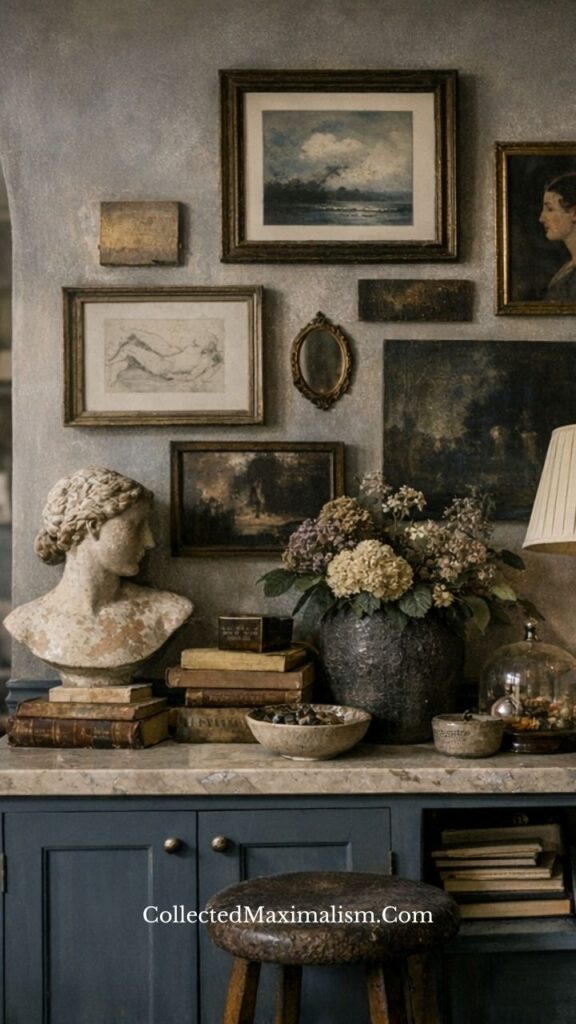
There is a certain stillness to these arrangements. A lamp casting a soft glow, a stack of books worn at the edges, florals leaning just slightly out of form. These console table decor ideas are not about filling space, but about creating presence—layered, intentional, and quietly lived-in.
1. Creating a Focal Point with Art and Mirrors
A console table rarely stands alone; it is completed by what rises behind it. A large painting, a softened mirror, or a gathered gallery wall creates the first layer of depth. This backdrop anchors the table, giving it context and visual weight within the room.
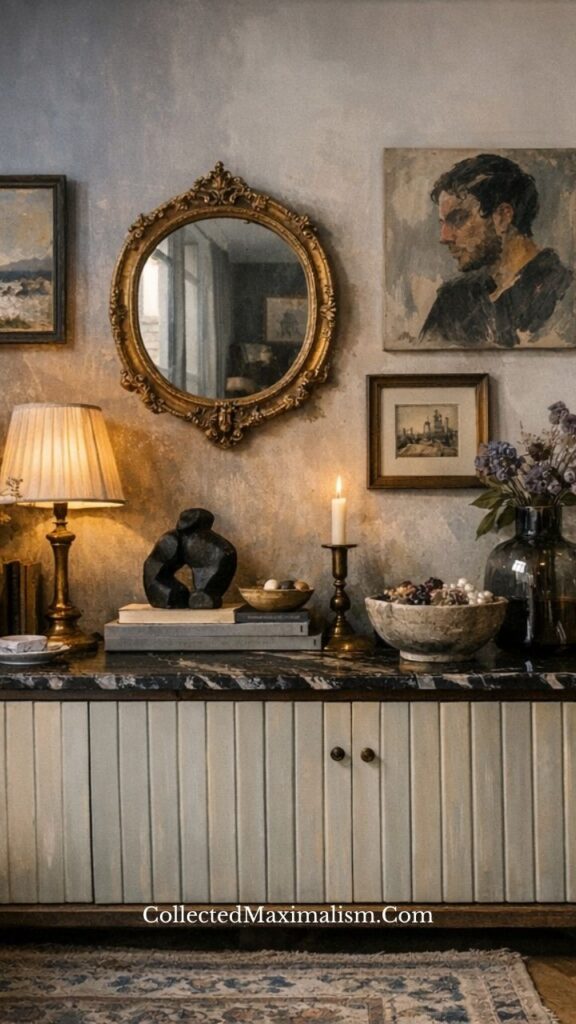
Rather than perfect alignment, the arrangement feels slightly shifted—frames leaning, heights varied, spacing intuitive. This subtle imbalance creates movement, allowing the eye to travel naturally across both wall and surface as one continuous composition.
2. Layering Height with Lamps and Candlelight
Height introduces rhythm. A table lamp with a softened shade or a cluster of candles draws the eye upward, creating vertical balance against the horizontal line of the console. Light becomes part of the styling, not just a function.
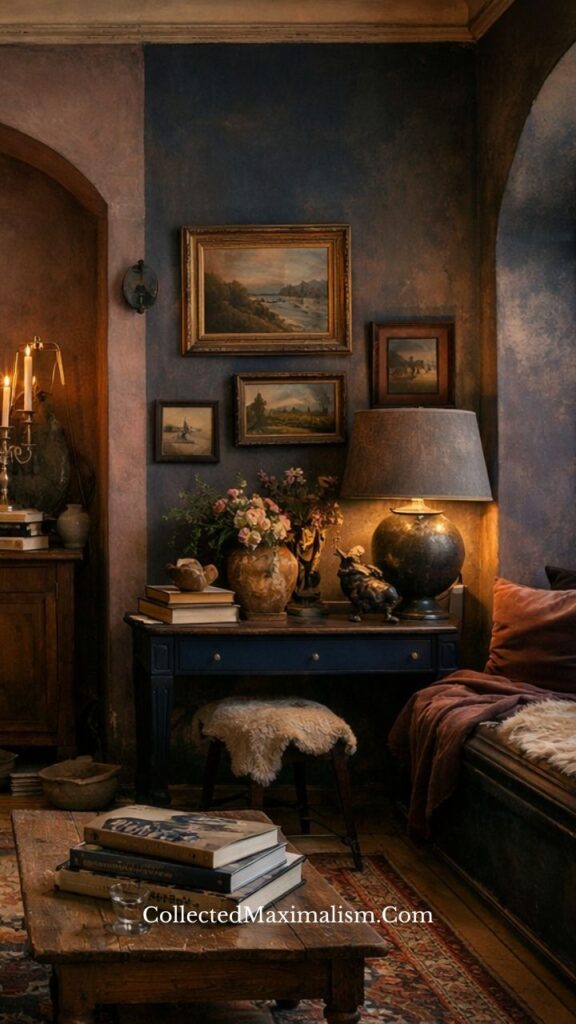
The glow itself changes the mood entirely. It softens edges, warms materials, and brings quiet attention to the objects nearby. In these spaces, lighting is less about brightness and more about atmosphere.
3. Styling with Books and Sculptural Objects
Books are often the first layer placed—grounding the arrangement while introducing story. Stacked horizontally or slightly offset, they create a base upon which smaller objects can rest.
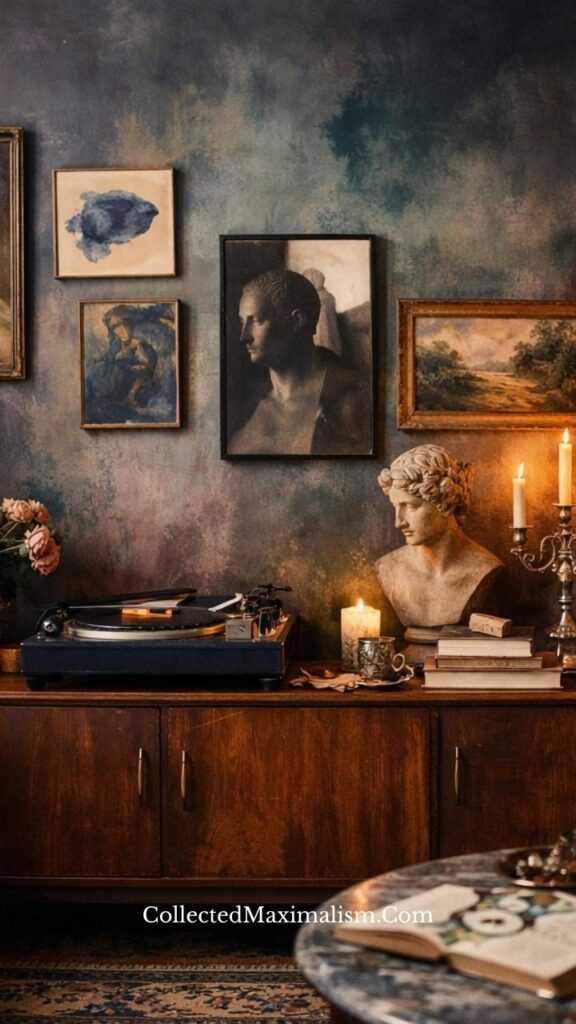
Sculptural elements—busts, carved forms, or found objects—add presence. They bring a sense of permanence, contrasting with softer elements and giving the table a quiet sense of history.
4. Florals and Soft Elements for Balance
Florals soften everything they touch. Whether fresh or dried, they introduce movement into a composition of still objects, bridging the space between structure and softness.
The key lies in restraint. Muted tones, slightly undone arrangements, and natural asymmetry allow florals to feel integrated rather than decorative—echoing the room instead of interrupting it.
5. Mixing Materials: Wood, Marble, and Brass
Material contrast creates depth without needing excess. A marble top reflects light softly, while aged wood absorbs it, grounding the composition. Brass elements introduce warmth, catching light in a way that feels aged rather than polished.
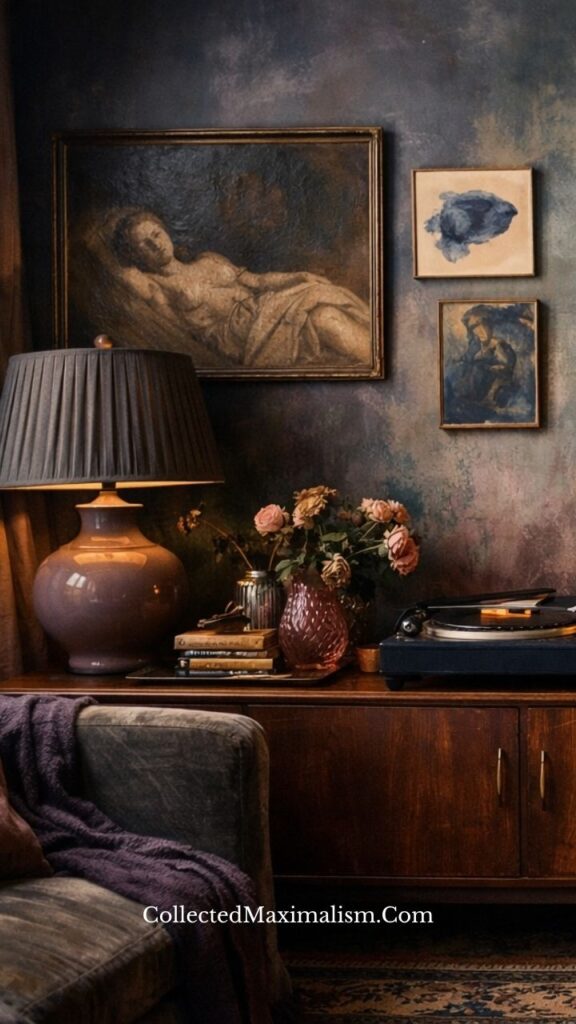
These materials do not compete—they balance. Each one carries a different weight, and together they create a layered surface that feels both tactile and calm.
6. Using Sideboards as Statement Consoles
A sideboard brings a different kind of presence. It holds more weight, both visually and physically, allowing for deeper layering while offering hidden storage beneath.
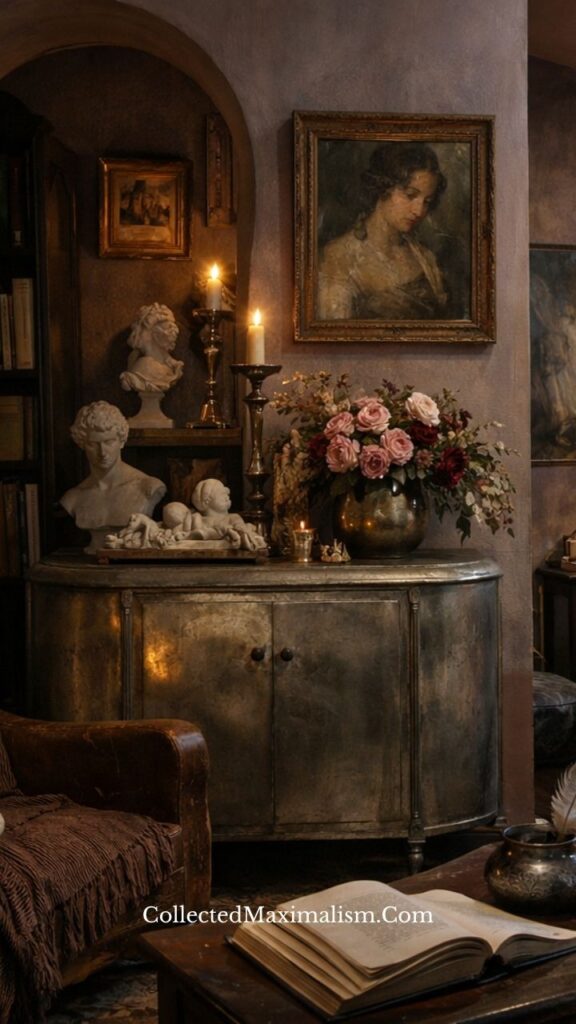
This dual function creates clarity. The surface remains expressive—styled with intention—while everything else is quietly contained. It allows maximalism to feel controlled, rather than overwhelming.
7. Creating Depth Through Wall Composition
Depth is not only created on the table, but between the table and the wall. Leaned frames, layered artwork, and overlapping objects create subtle shadows and dimension.
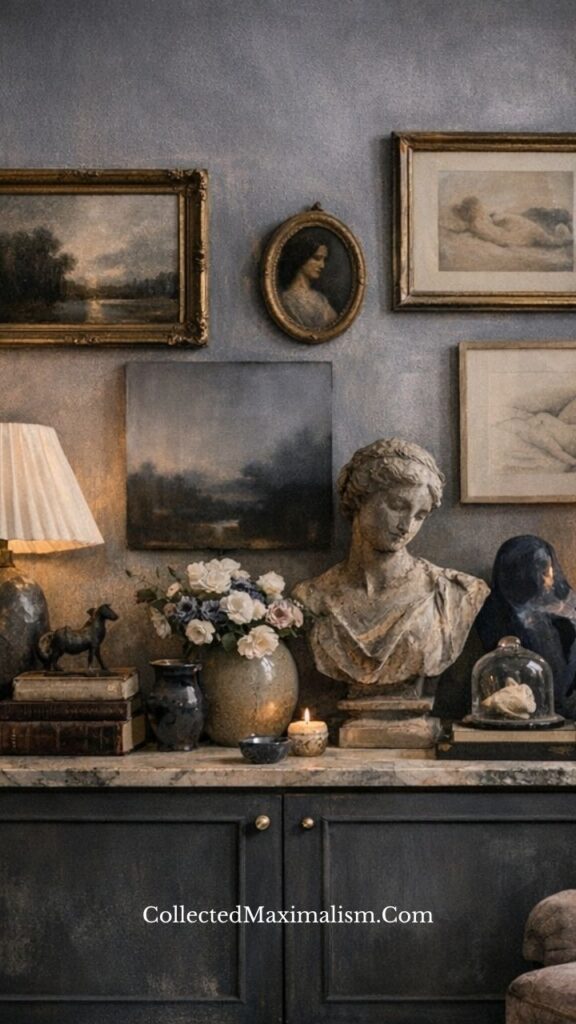
This layering pulls the arrangement forward, making it feel immersive rather than flat. The console becomes part of a larger visual field, where background and foreground are gently intertwined.
More on Maximalism
8 Dining Table Decor Ideas | Romantic Dark Academia Maximalism
Light Fixtures in Maximalism: A Softer Approach to Layered Light
How to Style a Maximalist Home Using Memories, Art, and Travel Objects
Collected Maximalism: The Art of Composed Intensity
12 Types of Maximalism in Interior Design — And How to Use Them Intentionally
Collected vs Curated in Maximalist Interiors: Is There a Difference?
The Psychology of Maximalism: Emotional Density in Layered Interiors
Minimal Maximalism: Abundance Within Restraint
The Maximalist Way to Shop: How to Collect with Intention
Maximalist Interior Design: Layering Texture, Form, and Warm Earth Tones
8. Controlled Density: Styling Without Clutter
There is a fine line between layering and excess. The difference lies in intention. Objects are grouped, not scattered—each one relating to the next through tone, material, or shape.
Even within density, there is space. Small pauses between objects allow the composition to breathe, ensuring the table feels full yet calm, rich but never overwhelming.
Shopping / Sourcing
- Vintage or antique sideboards
- Marble or stone-top consoles
- Table lamps with fabric shades
- Brass candlesticks (varied heights)
- Oil paintings and portrait prints
- Decorative mirrors (aged or antique-style)
- Stacked books (neutral, worn covers)
- Ceramic and metal vases
- Sculptural busts or objects
- Linen runners or folded textiles
10 Common Mistakes in Romantic Dark Academia Console Styling
1. Styling without a focal point
Without a central anchor, the arrangement can feel scattered. A single element—such as a lamp, mirror, or sculptural object—helps ground the composition and gives the eye a place to rest.
2. Keeping all objects at the same height
When everything sits at one level, the console can feel flat. Variation in height introduces movement, allowing the arrangement to feel more natural and visually balanced.
3. Overfilling the surface without intention
A full surface is not the issue—lack of intention is. When too many objects are placed without connection, the console feels heavy rather than layered. Thoughtful grouping creates clarity within density.
4. Ignoring the wall behind the console
The console and the wall should work together. Without art, a mirror, or vertical elements, the styling can feel incomplete, as if the composition stops too abruptly.
5. Using overly bright or contrasting colors
Strong contrasts can disrupt the calm depth of the space. Softer, muted tones allow the arrangement to feel cohesive and quietly layered rather than visually sharp.
6. Matching materials too closely
Too much uniformity can remove character. A mix of finishes—wood, brass, ceramic—adds subtle contrast, helping the console feel collected rather than overly coordinated.
7. Skipping lighting elements
Without a lamp or candlelight, the console can feel static. Lighting introduces warmth and depth, allowing the arrangement to shift gently throughout the day.
8. Placing objects without layering
Objects placed side by side can feel disconnected. Layering—overlapping books, leaning frames, grouped pieces—creates depth and a more natural flow across the surface.
9. Forgetting functional balance
While styling is important, the console still exists within a lived space. Leaving some room for use ensures the arrangement feels practical as well as considered.
10. Treating the console as a separate element
A console should feel connected to the room around it. When it reflects the colors, materials, and mood of the space, it becomes part of a larger story rather than a standalone feature.
Conclusion
A console table, when styled with intention, becomes more than a surface—it becomes a quiet introduction to the space around it. It holds the first impression, the subtle mood, the layered story that unfolds beyond it.
In romantic dark academia interiors shaped by vintage maximalism, this space is never static. Objects shift, light changes, compositions evolve. And yet, it always feels complete—not because everything is perfectly arranged, but because everything belongs.
10 FAQs for Romantic Dark Academia Console Table Styling
1. What defines a dark academia console table?
A dark academia console table is defined by mood and layering rather than specific objects. It brings together vintage elements, muted tones, and softly aged materials to create a surface that feels thoughtful, quiet, and slightly nostalgic.
2. How do you style a console table without clutter?
Clutter is avoided through connection. When objects relate in tone, material, or shape, the arrangement feels cohesive, allowing multiple pieces to exist without overwhelming the space.
3. Can a sideboard replace a console table?
Yes, and often beautifully. A sideboard adds visual weight and hidden storage, allowing the surface to remain expressive while keeping the overall look calm and controlled.
4. What should be placed in the center of a console table?
A central anchor—such as a lamp, florals, or a sculptural object—helps ground the composition. It gives the eye a place to settle before moving across the rest of the arrangement.
5. How do you balance height on a console table?
Balance comes from variation. Taller elements like lamps or vases are paired with lower objects such as books or trays, creating a gentle rhythm that feels natural rather than structured.
6. Are mirrors or art better above a console table?
Both can work, depending on the mood. Mirrors reflect light and soften the space, while artwork adds depth and narrative. The choice depends on whether you want the wall to feel lighter or more grounded.
7. What colors work best for this style?
Muted, deeper tones tend to work best—warm browns, soft blacks, dusty greens, and aged neutrals. These colors allow the layering to feel calm and cohesive rather than sharp or contrasting.
8. How do you mix different decor objects?
Mixing works when there is a quiet connection between pieces. Repeating materials, tones, or shapes helps different objects feel related, even when they vary in form or function.
9. Can this style work in small entryways?
Yes, it adapts well to smaller spaces. By using fewer objects but maintaining variation in height and texture, the console can still feel layered without becoming crowded.
10. How often should console styling be updated?
There is no set rhythm. Small changes—shifting an object, adding a new piece, or adjusting placement—are often enough to keep the table feeling fresh while maintaining its overall balance.