Introduction
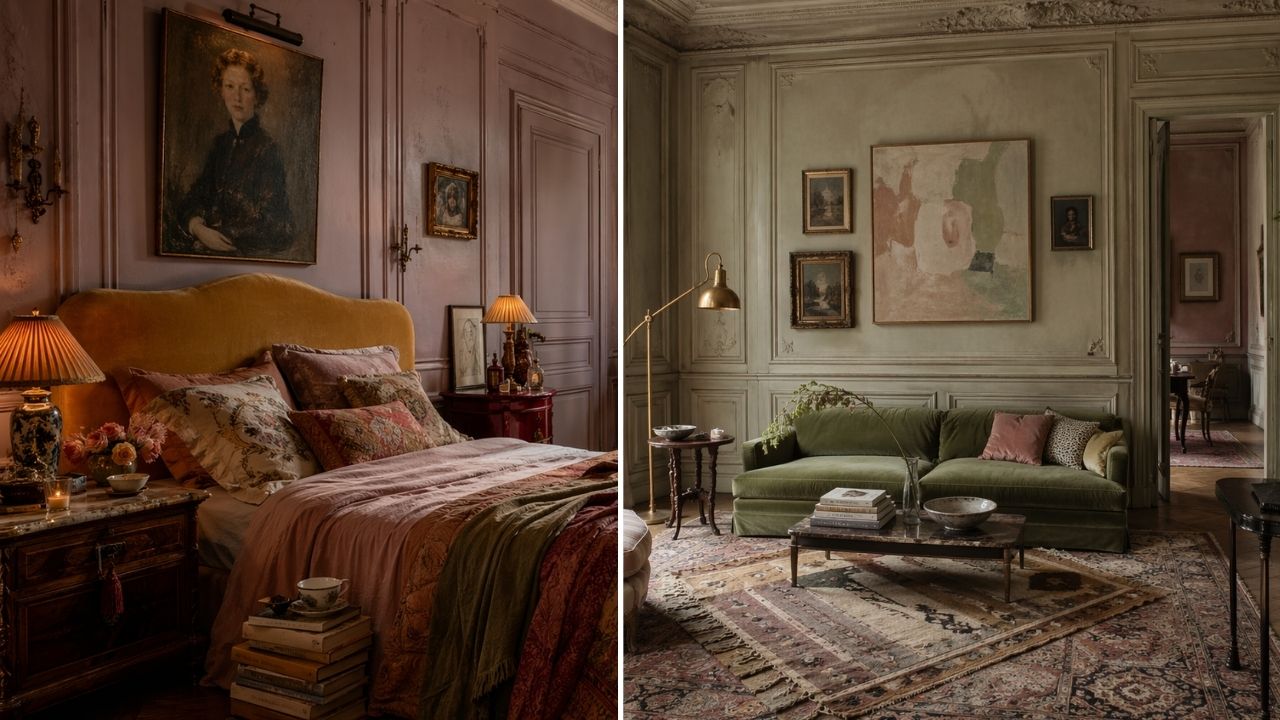
A Parisian interior is often misunderstood as neutral, airy, and quietly elegant. But there is another version—richer, more expressive, and far more layered—where color enters the room with confidence, yet never overwhelms it. This is not excess for its own sake, and it is not quiet luxury stripped of personality. It is a refined form of maximalism shaped by architecture, curation, and control.
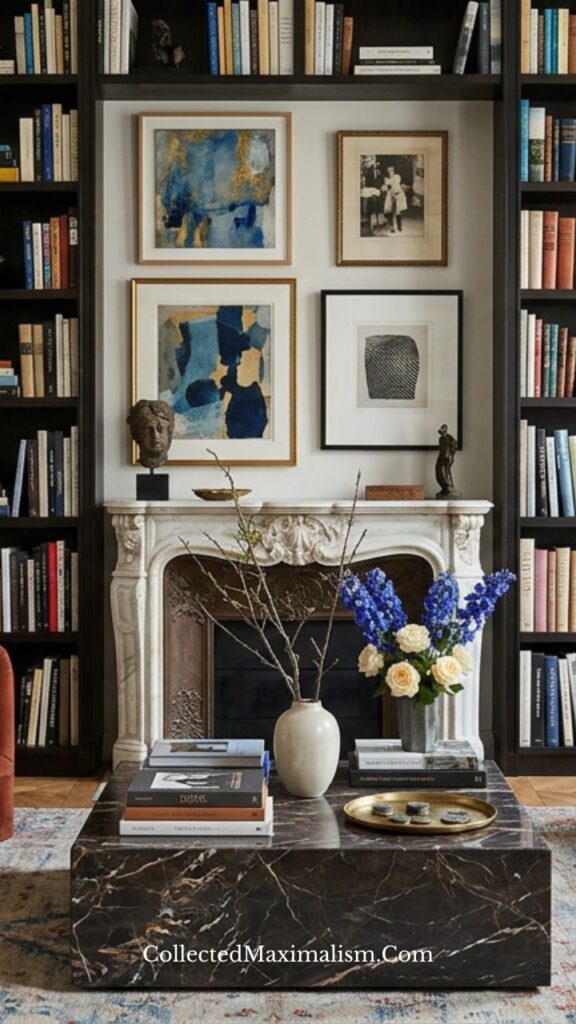
What makes this approach feel distinctly Parisian is not restraint alone, but disciplined richness. Color is present, but it is resolved. Objects are layered, but they do not crowd the room. The space feels collected over time, shaped by taste and memory rather than trends. Parisian maximalism, in this form, is not loud. It is composed, expressive, and deeply human.
1. Begin with Architectural Calm
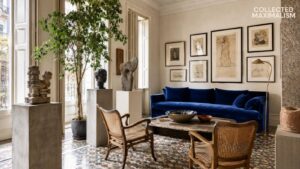
A Parisian interior can hold color and complexity because the architecture creates order first. Moldings, tall windows, fireplaces, ceiling details, and elongated proportions provide a framework that naturally steadies the room, allowing richer furniture and layered styling to sit inside it without feeling chaotic. Even when the palette becomes more expressive, the architecture keeps the visual language grounded.
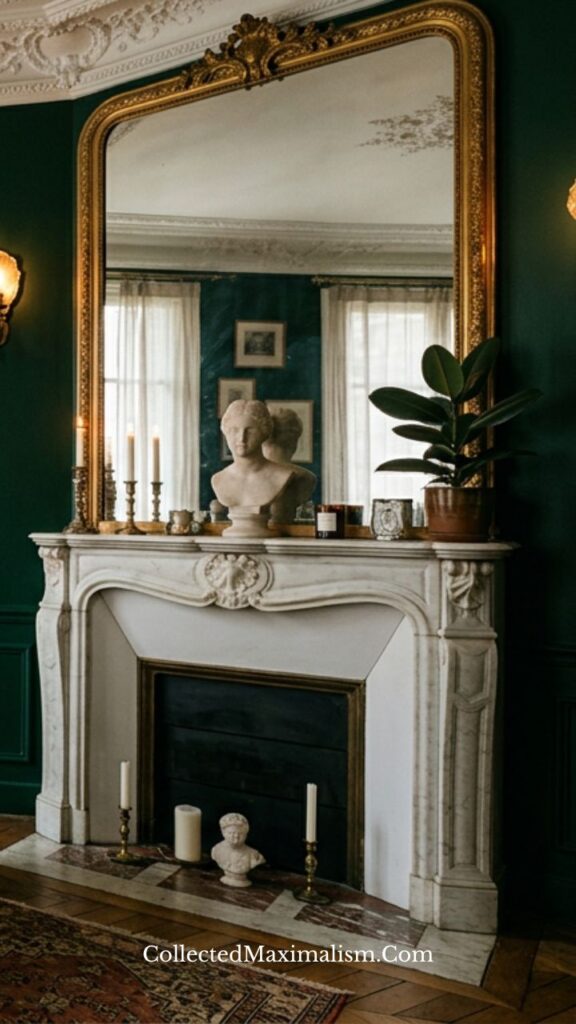
That balance is essential. Without structure, eclectic color can feel restless. With it, the room feels confident. The Parisian backdrop is what allows maximalism to become refined rather than excessive, giving every object a sense of place within a larger composition.
Pro tip: Let walls, trim, and architectural lines act as visual punctuation before adding stronger pieces.
2. Use Color as Conversation, Not Decoration
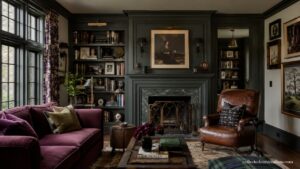
This version of Parisian maximalism does not rely on beige safety or quiet monochrome palettes. Instead, it uses color with intention—coral against moss, ochre beside dusty blue, plum against aged wood, muted green near faded rose. The goal is not matching, but dialogue. Colors should contrast, soften, echo, and balance one another.
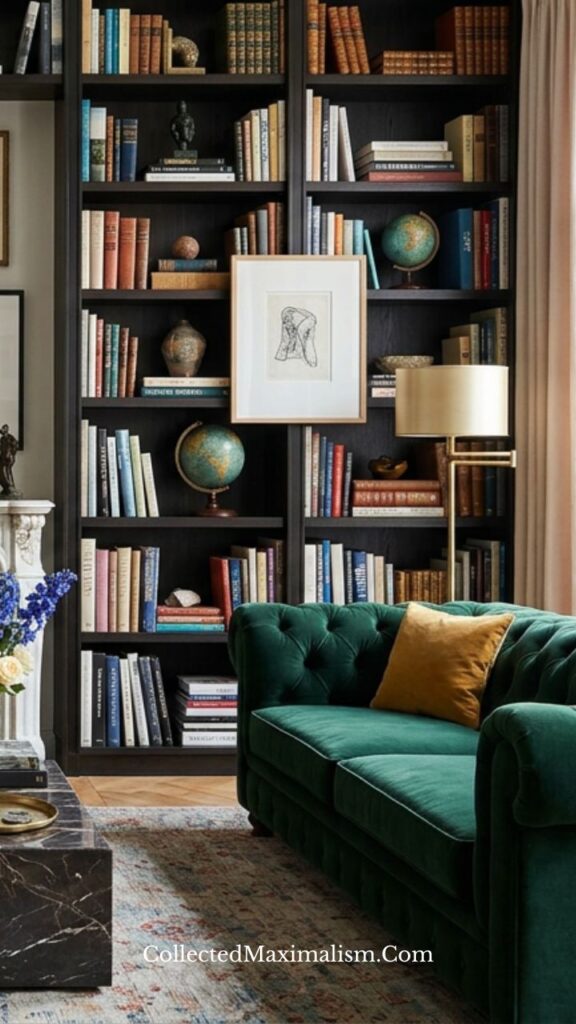
What keeps the palette elevated is control. Rather than filling a room with many equally loud shades, choose a few colors with different roles: one dominant tone, one contrasting note, and one softer bridge. That is what gives the room its richness without making it feel sweet, busy, or visually unstable.
Pro tip: Think in threes: anchor color, contrast color, and quiet connecting tone.
3. Create Richness Without Losing Refinement
Parisian maximalism is rich, but it is never heavy-handed. The room should feel full of character, not full of stuff. Velvet, wood, marble, brass, plaster, worn textiles, and aged finishes all contribute to a sense of depth, but they work best when layered with pauses in between. Richness here is built through material contrast and tonal variation, not through constant visual noise.
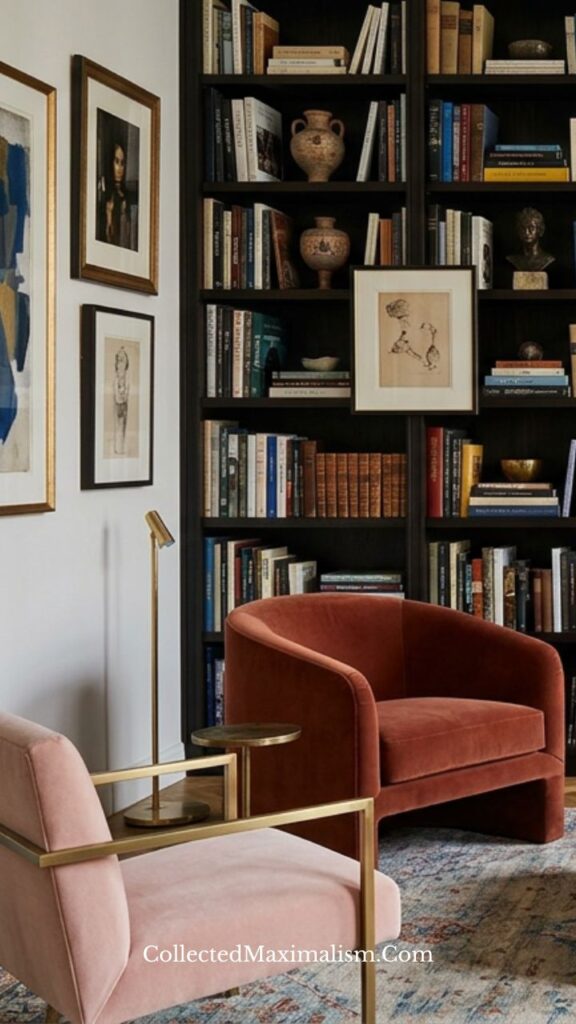
This is where many interiors lose their elegance. They pursue abundance but forget proportion. A Parisian room still needs breath. Negative space on a wall, a pause between objects, or an uncluttered stretch of sofa gives the eye somewhere to rest, making the collected elements feel more intentional.
Pro tip: Let one area feel quieter so another can feel more expressive.
4. Mix Furniture with Character and Tension
Matching sets rarely belong in a collected Parisian interior. Instead, the room should feel shaped by different moments and instincts: a tailored sofa near a curved armchair, an antique pedestal table beside a contemporary lamp, a structured silhouette softened by worn upholstery. The beauty comes from contrast held in balance.
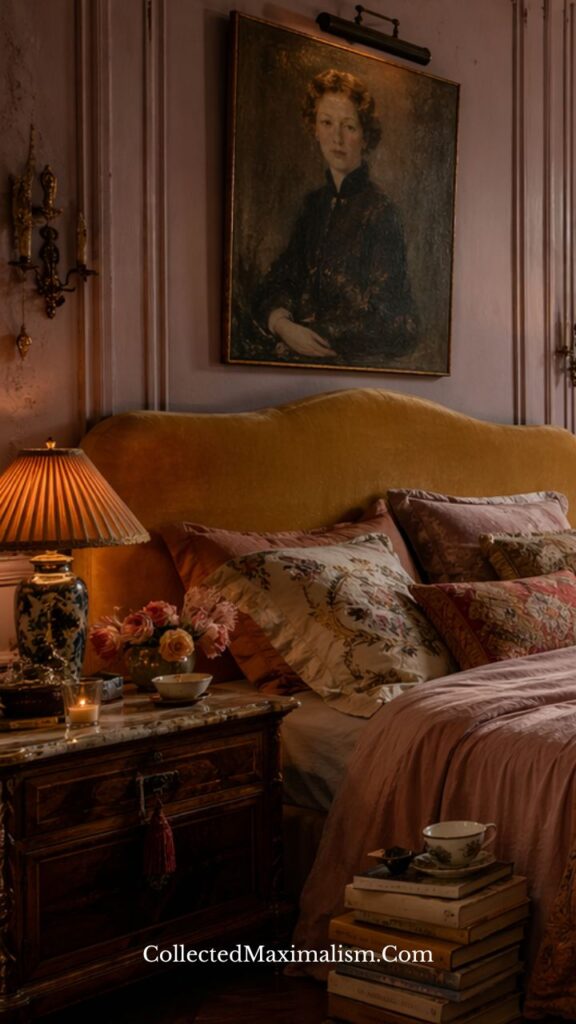
Furniture should feel selected, not coordinated. Pieces need presence, but they should not all speak at the same volume. A room becomes more compelling when one element introduces softness, another structure, and another age. This interplay creates a layered emotional quality that feels lived-in and editorial rather than decorative.
Pro tip: Pair one sculptural form with one grounded, linear piece to avoid visual uniformity.
5. Layer Objects as if They Arrived Over Time
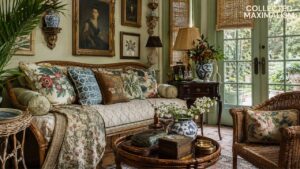
Books, ceramics, florals, trays, bowls, framed works, candlesticks, and small personal objects all belong in a Parisian maximalist interior—but they should feel accumulated, not arranged in a single afternoon. Styling should suggest a life that has been observed, adjusted, and shaped gradually.
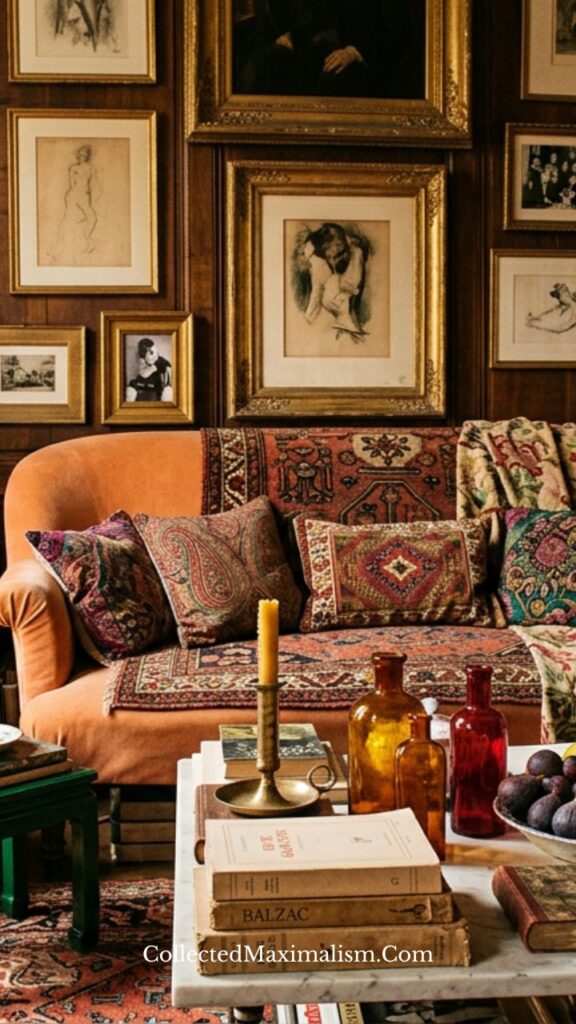
That is why irregularity matters. A slightly uneven stack of books, a ceramic vessel placed just off-center, a small object that feels personal rather than polished—these details create authenticity. The room becomes persuasive when it feels inhabited by taste, not designed for display alone.
Pro tip: Style in clusters, then remove one thing so the arrangement can breathe.
6. Let Art Feel Curated, Not Over-Coordinated
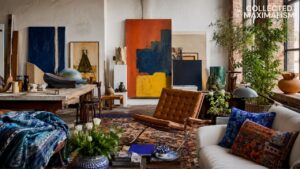
Art is one of the clearest markers of a Parisian interior, but in this approach it should never feel theme-driven or overly matched to the room. A large expressive painting, a faded portrait, a sketch, a still life, or a contemporary abstract can all coexist, provided the arrangement feels thoughtful rather than rigid.
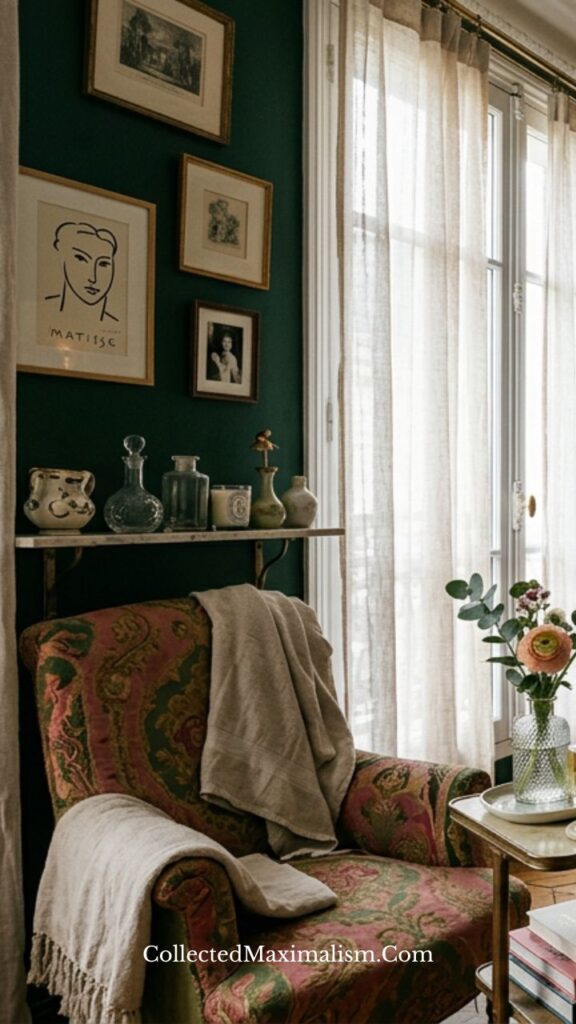
The strength of Parisian maximalism lies in edit, not volume. A room does not need every wall covered to feel layered. One oversized piece may carry more depth than six smaller ones. Allow some blank space to remain visible so the eye can register the architecture and the art separately.
Pro tip: Choose art that adds tension or contrast, not just harmony.
7. Build Depth Through Patina and Imperfection
A refined room can still feel emotionally flat if every surface looks too new. Parisian interiors often gain their depth through age—faded rugs, softened wood, tarnished metal, slightly uneven finishes, worn edges, linen that wrinkles naturally. These quiet imperfections are what make richness believable.
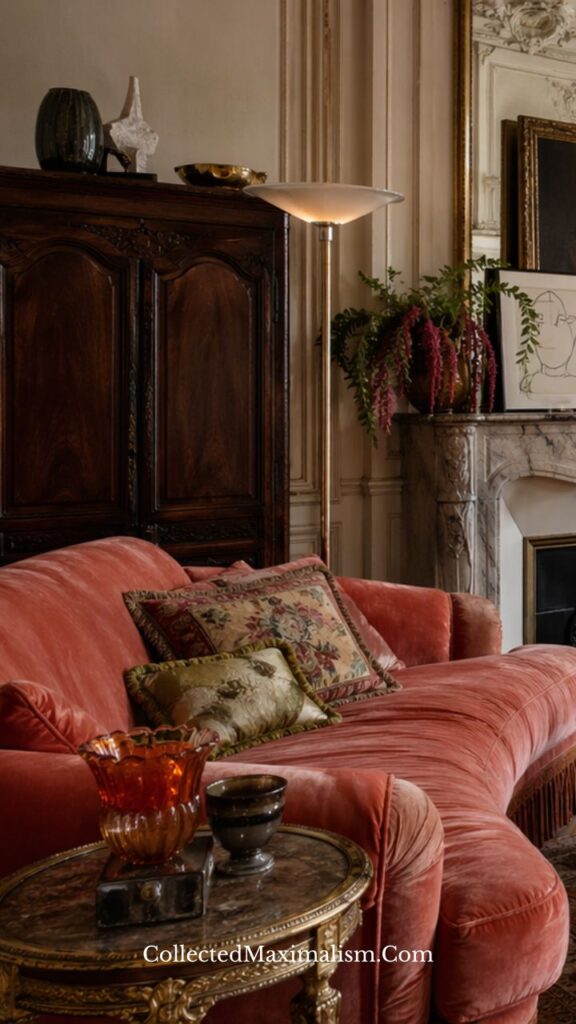
Patina prevents color from becoming slick and prevents maximalism from looking theatrical. It introduces memory into the room. Instead of aiming for polished perfection, allow certain pieces to carry wear and softness. That is what turns decoration into atmosphere.
Pro tip: Balance one polished surface with one weathered or tactile one nearby.
8. Use Lighting to Soften and Deepen the Palette
In a colorful interior, lighting matters even more. Flat brightness can make rich tones feel harsh or artificial, while softer light reveals nuance—dusty undertones, aged finishes, fabric depth, and the subtle relationship between one color and another. Parisian interiors are often at their best in filtered daylight, warm lamp glow, and the layered shadow of evening.
The light should not erase the palette. It should deepen it. A refined maximalist room feels most compelling when certain areas fall into softness and others catch gentle highlights, creating mood and dimension without theatrical drama.
Pro tip: Use multiple points of warm light instead of one dominant overhead source.
9. Keep the Room Expressive, Not Excessive
The difference between refined maximalism and visual overload often comes down to hierarchy. A room can be colorful, layered, and artful, but it still needs a focal point—perhaps the sofa, the mantel, a gallery wall, or a striking chair. Once the eye understands where to land, the rest of the room can unfold more slowly.
Without that hierarchy, even beautiful objects begin to compete. Parisian interiors succeed because they feel composed. The richness supports the room’s identity; it does not dissolve it. This is what keeps the overall feeling confident and collected rather than crowded.
Pro tip: Every room needs one visual anchor and several quieter supporting elements.
10. Let the Home Feel Personal, Not Formulaic
The most persuasive Parisian interiors do not look designed to fit a label. They feel like an extension of a person—cultivated, observant, expressive, and slightly imperfect. That is especially important in a maximalist space with color. The room should not feel like a set of rules being followed; it should feel like a life being translated through objects, textures, and mood.
This is where the final layer of refinement comes in. A Parisian maximalist interior is not simply stylish. It is self-possessed. It knows when to hold back, where to deepen, and how to let beauty emerge through composition rather than display.
Pro tip: Keep one element in every room slightly unexpected—a color note, an antique, a piece of art, or a texture shift.
More on Maximalism
8 Dining Table Decor Ideas | Romantic Dark Academia Maximalism
Light Fixtures in Maximalism: A Softer Approach to Layered Light
How to Style a Maximalist Home Using Memories, Art, and Travel Objects
Collected Maximalism: The Art of Composed Intensity
12 Types of Maximalism in Interior Design — And How to Use Them Intentionally
Collected vs Curated in Maximalist Interiors: Is There a Difference?
The Psychology of Maximalism: Emotional Density in Layered Interiors
Minimal Maximalism: Abundance Within Restraint
The Maximalist Way to Shop: How to Collect with Intention
Maximalist Interior Design: Layering Texture, Form, and Warm Earth Tones
Shopping / Sourcing
- antique or vintage wood tables
- sculptural armchairs
- velvet or textured upholstered seating
- aged brass lamps and sconces
- expressive framed art
- worn rugs with softened color
- ceramic vessels and bowls
- stacked art and design books
- marble or stone accent pieces
- floral branches and loose arrangements
10 Common Mistakes To Avoid
1. Using too many bright colors at once
When every tone demands attention, the room loses its Parisian restraint and begins to feel restless.
2. Making the palette too sugary
Soft colors can be beautiful, but if everything feels sweet or pastel-heavy, the room loses depth and maturity.
3. Matching objects too closely
Too much coordination removes the sense of discovery that makes a collected room compelling.
4. Ignoring negative space
A layered room still needs emptier moments, otherwise the richness becomes visual fatigue.
5. Choosing furniture that is all soft
Too many plush, rounded pieces can make the room feel overly decorative rather than structured and elegant.
6. Styling every surface equally
Not every shelf, table, or wall needs the same density. Variation creates rhythm.
7. Using art only as color filler
Art should bring character and viewpoint, not simply repeat the room’s palette.
8. Over-polishing the room
If everything feels too new and perfect, the interior loses the human quality that gives Parisian spaces their emotional pull.
9. Relying on trends instead of taste
A Parisian room feels individual and lived with, not assembled from the latest aesthetic cycle.
10. Forgetting emotional tone
The room should feel calm, expressive, and self-possessed—not loud, performative, or over-styled.
10 FAQs about Parisian Maximalism
1. Is Parisian style always neutral?
No. While many Parisian interiors lean soft and muted, they can also hold eclectic color beautifully when the palette is controlled and balanced.
2. What makes Parisian maximalism different from regular maximalism?
It is more restrained, architectural, and edited. The room feels layered and expressive, but never chaotic or overly theme-based.
3. Can I use strong colors in a Parisian interior?
Yes, but they should feel resolved. Use a few confident tones rather than many equally loud colors competing at once.
4. How do I keep a colorful room feeling refined?
Balance bold tones with aged neutrals, patina, negative space, and a clear focal hierarchy.
5. Does furniture need to match?
No. A more collected approach works better, mixing structure, curves, vintage pieces, and contemporary accents.
6. What materials suit this look best?
Velvet, wood, plaster, marble, linen, brass, and worn textiles all help create layered Parisian richness.
7. Should art match the palette?
Not exactly. Art should feel curated and slightly independent, adding tension and personality to the room.
8. How do I avoid clutter?
Edit constantly. Let some surfaces breathe and make sure objects vary in scale, shape, and visual weight.
9. What role does architecture play in this look?
Architecture provides the calm framework that allows color and layering to feel elevated rather than busy.
10. Is this style more design or decor?
It sits more firmly in Design, because it is about the philosophy, composition, and identity of the space as a whole.