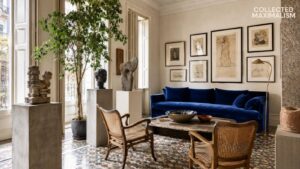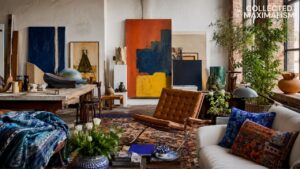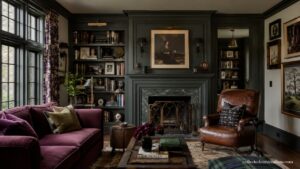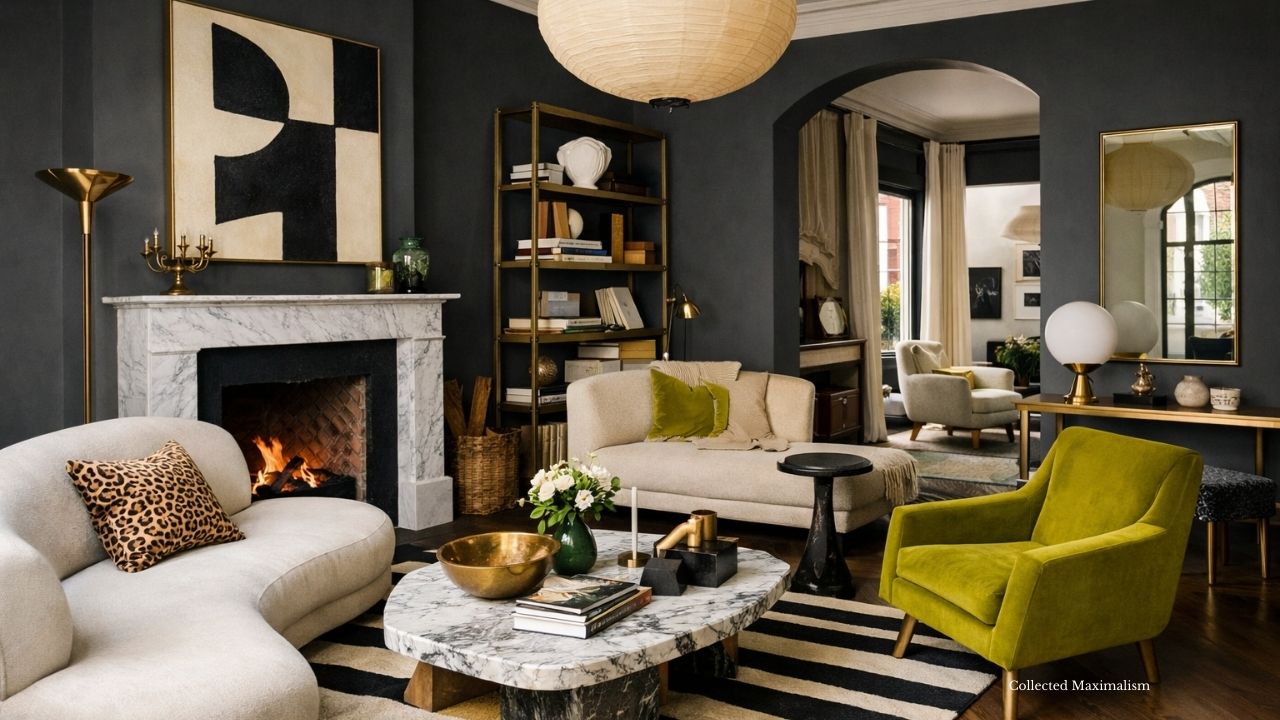
Maximalism is often associated with fullness — layered textiles, art-covered walls, saturated color, and collected objects.
Minimalism, by contrast, is defined by subtraction — clean lines, open space, and restraint.
Minimal Maximalism lives between these extremes.
It is not a compromise.
It is a concentration.
Minimal Maximalism holds richness within structure. It allows abundance to exist — but only where it carries weight. It values pause as much as layering. It understands that intensity does not require excess.
Where traditional maximalism distributes density across the room, Minimal Maximalism focuses it deliberately.
It is maximalism edited to precision.
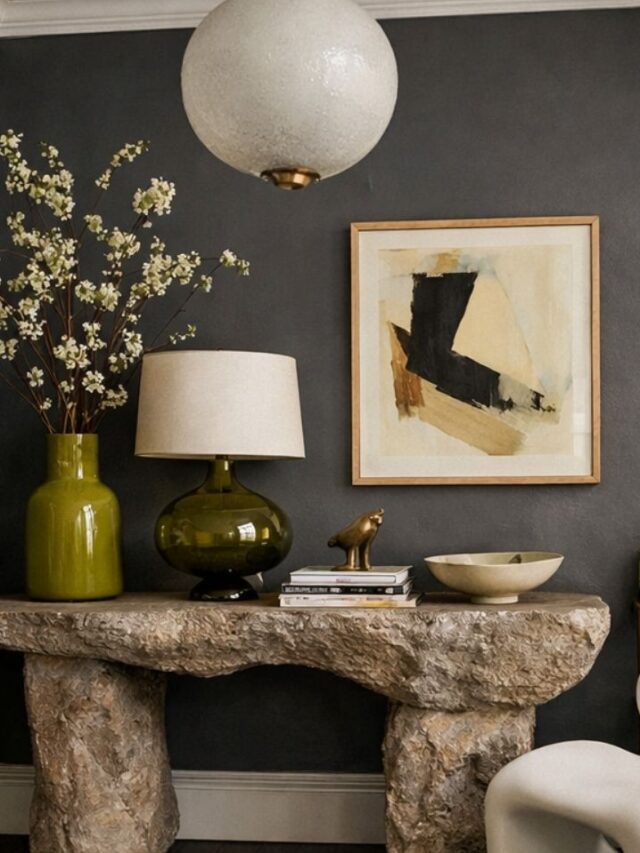
What Is Minimal Maximalism?
Minimal Maximalism does not remove personality.
It removes noise.
It is not about reducing expression — it is about refining it. Instead of layering across every surface, it concentrates visual impact into intentional zones. Density is not distributed widely; it is focused precisely.
A living room may feel calm and spacious — yet one wall carries a dramatic gallery that commands attention.
A bedroom may rest within a neutral architectural envelope — yet the bedding introduces bold pattern and tonal richness.
A dining space may be clean-lined and restrained — yet a sculptural chandelier dominates overhead with unapologetic presence.
The abundance remains.
It is simply framed.
Minimal Maximalism is not about fewer objects. It is about stronger ones. It asks each piece to carry more weight, more authority, more narrative value.
Instead of layering for effect, it layers for impact.
The Role of Negative Space
In Minimal Maximalism, negative space becomes structural.
It is not an afterthought. It is an active design element.
Empty wall sections amplify bold artwork.
Clear tabletops elevate sculptural objects.
Open floor areas highlight statement furniture.
Negative space is not emptiness.
It is contrast.
Without contrast, density collapses into clutter. Without pause, intensity becomes overwhelming. But when framed by openness, bold elements feel deliberate and powerful.
Negative space gives the eye somewhere to rest — so that when it moves again, it feels directed rather than scattered.
Minimal Maximalism understands that pause strengthens presence.
It allows the room to breathe without losing identity.
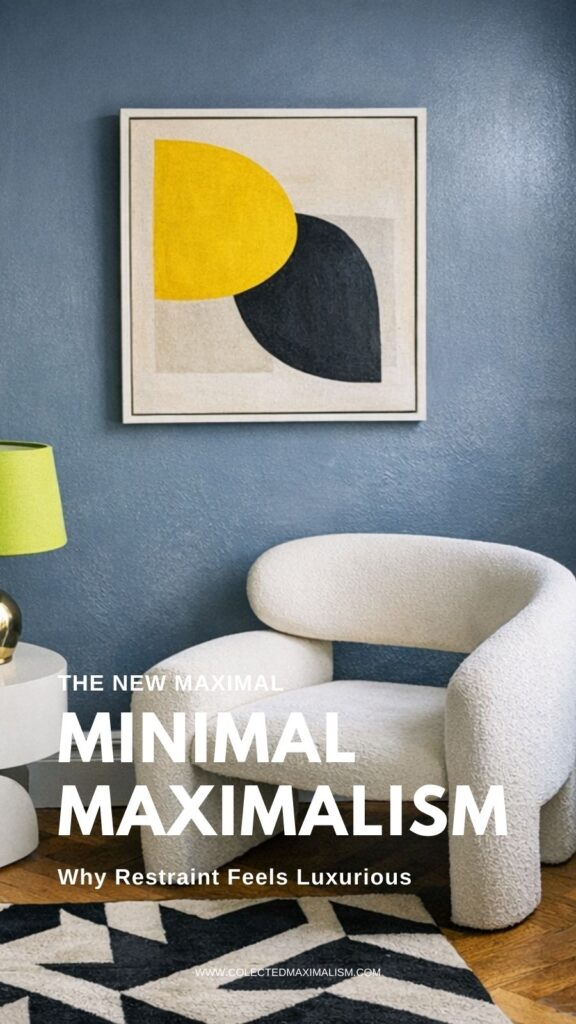
Why It Resonates Today
Contemporary homes often feature:
- Open layouts
- Neutral architectural envelopes
- Clean lines
- Large windows
- Expansive light
Traditional maximalism can sometimes overwhelm these frameworks. Minimal Maximalism works within them.
It does not fight the architecture.
It punctuates it.
One saturated sofa against white walls.
One bold mural within a restrained room.
One deeply layered bookshelf in an otherwise quiet space.
Impact replaces quantity.
In modern spaces especially, restraint amplifies drama. The fewer the gestures, the stronger each one must be.
Minimal Maximalism feels aligned with contemporary architecture because it respects scale and proportion before layering expression.
The Psychology of Minimal Maximalism
Some people crave richness but fear overwhelm.
They want color. They want personality. They want objects with meaning — but they also want clarity.
Minimal Maximalism satisfies both instincts.
It offers:
- Emotional layering
- Personal objects
- Strong color moments
- Architectural calm
Without visual chaos.
It feels expressive yet composed.
It allows identity to surface without drowning the senses.
This approach is particularly appealing to those who are drawn to maximalism intellectually but are sensitive to overstimulation visually.
Minimal Maximalism proves that abundance can be quiet.
How to Practice Minimal Maximalism
Begin with decision.
Choose one dominant focal point per room.
Let it carry weight.
Limit object clusters to intentional areas.
Do not layer everywhere.
Use dramatic scale instead of many small pieces.
Scale creates authority.
Repeat color or material for cohesion.
Repetition creates stability.
Allow negative space to frame density.
Contrast creates impact.
This approach demands editing — but editing sharpens impact rather than dilutes it.
Minimal Maximalism is not about restraint out of fear.
It is about restraint out of confidence.
More on Maximalism
How to Style a Maximalist Home Using Memories, Art, and Travel Objects
Collected Maximalism: The Art of Composed Intensity
12 Types of Maximalism in Interior Design — And How to Use Them Intentionally
Collected vs Curated in Maximalist Interiors: Is There a Difference?
The Psychology of Maximalism: Emotional Density in Layered Interiors
When Minimal Maximalism Fails
Minimal Maximalism becomes ineffective when hesitation replaces clarity.
It fails when:
- The room becomes too sparse and loses warmth.
- Objects feel randomly placed rather than concentrated.
- Bold color appears once and disappears.
- Architectural context is ignored.
- Editing removes character instead of noise.
Minimal Maximalism is disciplined — not timid.
It requires clarity of decision and strength of vision.
If traditional maximalism is about layering widely, Minimal Maximalism is about layering precisely.
It is not less expressive.
It is more intentional.
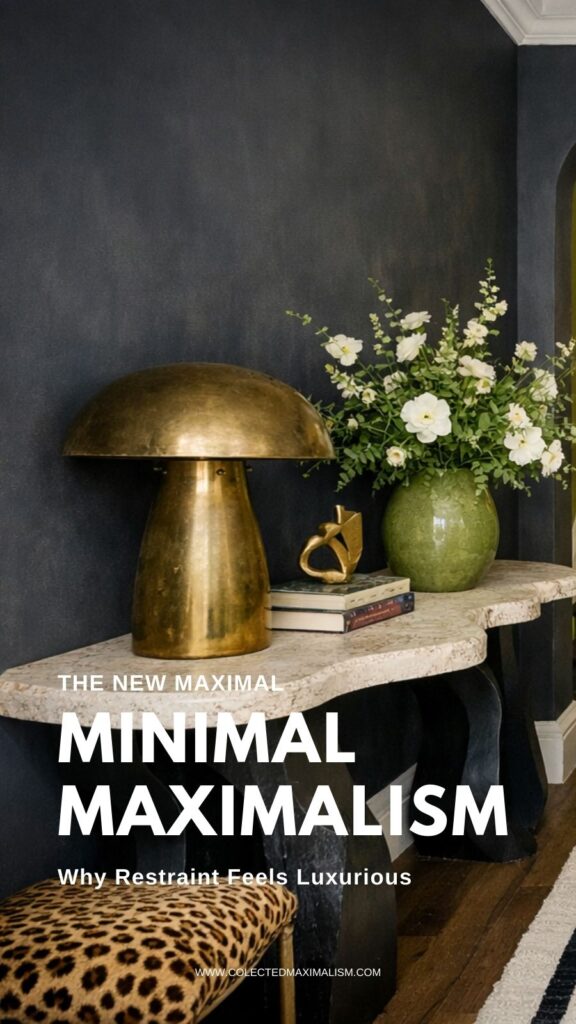
10 Common Mistakes in Minimal Maximalism
Minimal Maximalism is subtle. Because it operates within restraint, the margin for error is narrow. These are the most common ways it quietly collapses.
1. Confusing It with Minimalism
Minimal Maximalism is not minimalism with one bold object added for drama.
If you remove too much — too many layers, too much texture, too much narrative — the room loses dimension. It becomes restrained, yes, but also emotionally thin.
The goal is concentrated abundance, not emptiness.
A Minimal Maximalist space should still feel layered, expressive, and intentional. If it feels sparse or unfinished, you’ve crossed into reduction instead of refinement.
2. Scattering Bold Pieces Randomly
Minimal Maximalism depends on focus.
One powerful moment — a dramatic artwork, a saturated sofa, a sculptural light fixture — works because it commands attention within calm surroundings.
But if bold pieces are scattered across the room without hierarchy, they compete rather than concentrate impact.
Intensity needs containment.
Choose one dominant zone and allow it to lead. Supporting elements should whisper, not rival.
3. Ignoring Repetition
Even restrained spaces require cohesion.
If a bold color appears once and nowhere else, it feels accidental. If a sculptural material stands alone without echo, it feels disconnected.
Repetition stabilizes restraint.
Echo the tone in a book spine. Repeat the metal in a lamp base. Reflect the color in a subtle textile.
Minimal Maximalism is quieter — but it still relies on visual rhythm.
4. Using Only Small Objects
Minimal Maximalism relies on scale.
Small objects lack authority in restrained environments. Without larger forms to anchor them, they drift visually and weaken composition.
One oversized canvas is stronger than six small frames.
One sculptural vase carries more weight than three decorative trinkets.
When you reduce quantity, scale must increase.
5. Eliminating Negative Space
This mistake often happens unintentionally.
In an attempt to preserve layering, people begin filling gaps — closing visual pauses that are essential to this style.
Negative space must remain visible.
It is the frame that gives bold elements power. Without it, the room drifts back toward traditional maximalism.
Contrast must be protected.
6. Forgetting Emotional Warmth
Minimal architecture without texture can feel cold.
If restraint removes softness, tactility, and warmth, the space risks becoming impersonal.
Introduce linen, wood, ceramic, woven textures, and warm lighting.
Minimal Maximalism is disciplined — not sterile.
It should feel intentional, not intimidating.
7. Over-Editing
Editing is essential. Over-editing is destructive.
When you continue removing objects until the room feels safe but no longer personal, you’ve edited past clarity into caution.
Minimal Maximalism still requires identity.
If the room begins to feel generic or neutralized, you have removed too much narrative weight.
Editing should sharpen impact — not erase personality.
8. Ignoring Lighting
Focused abundance demands thoughtful illumination.
A bold art piece without lighting loses its authority. A sculptural object in shadow feels accidental.
Layer lighting:
- Accent lights for art
- Soft ambient lamps
- Warm-toned bulbs
Lighting defines whether restraint feels composed or unfinished.
9. Mixing Too Many Styles
Minimal Maximalism thrives on clarity.
If modern, vintage, romantic, and industrial elements are introduced equally, the focus fractures.
One aesthetic lens must lead.
Supporting influences can remain subtle, but hierarchy is essential.
Restraint without hierarchy feels indecisive.
10. Treating It as a Trend
Minimal Maximalism is not a social media aesthetic.
It is a structural approach to design.
If adopted superficially — copying imagery without understanding scale, contrast, and repetition — it will feel temporary.
But when approached as discipline, it becomes timeless.
It is not about decorating less.
It is about composing with precision.
Final Thought: Precision, Not Reduction
Minimal Maximalism proves something essential:
Maximalism is not about more.
It is about weight.
When abundance is focused, framed, and intentional, even a restrained room can feel richly layered.
This is not the absence of maximalism.
It is its refinement.
10 Frequently Asked Questions About Minimal Maximalism
1. Is Minimal Maximalism just modern decor?
No. While it often appears in modern interiors because of clean architectural lines, Minimal Maximalism is not confined to one aesthetic. It can exist within classic, architectural, romantic, or even vintage spaces — as long as density is concentrated and intentional rather than widely distributed.
2. How many focal points should a room have?
Ideally, one dominant focal area. This could be a dramatic artwork, a sculptural light fixture, or a bold piece of furniture. Secondary elements may support it, but they should never compete equally for attention. Hierarchy preserves clarity.
3. Can color still be bold in Minimal Maximalism?
Absolutely. Bold color works beautifully when it is anchored and repeated thoughtfully. A saturated sofa or dramatic wall can define a room — as long as the surrounding space allows it to breathe.
4. Does this approach work in small spaces?
Very well. In compact rooms, concentrated layering prevents visual overwhelm. One impactful zone often feels stronger than multiple scattered elements, making Minimal Maximalism particularly effective in smaller homes or apartments.
5. Is it expensive to achieve?
Not necessarily. Minimal Maximalism is less about quantity and more about precision. Strong editing, careful placement, and thoughtful repetition often matter more than the price of the objects themselves.
6. Can I mix vintage and modern pieces?
Yes — but allow one to lead. A modern architectural base can support vintage statement pieces, or a classic room can highlight contemporary art. The key is visual hierarchy, not equal blending.
7. What is the difference from full maximalism?
Full maximalism distributes density broadly across the room. Minimal Maximalism concentrates it. Instead of layering everywhere, it builds intensity in specific, deliberate areas.
8. How do I avoid it feeling empty or unfinished?
Introduce warmth through texture and lighting. Linen, wood, woven materials, ceramic, and warm-toned bulbs prevent restraint from feeling sterile. Density may be focused — but the room should still feel lived-in.
9. Should walls be mostly blank?
Not blank — but framed. Negative space should feel intentional. A mostly open wall surrounding a powerful artwork is not emptiness; it is contrast that strengthens the focal point.
10. What is the core principle of Minimal Maximalism?
Density with discipline.
It is abundance refined, not reduced. It is boldness framed by structure. It is expression concentrated rather than scattered.